
You know you should floss—but string floss feels uncomfortable, frustrating or nearly impossible to use consistently. Maybe your teeth are tightly spaced, your gums feel sensitive, you have braces or dental work, or the entire process simply makes you anxious.
If this sounds familiar, you are definitely not alone. A recent online discussion began with a surprisingly relatable question: “Is a water flosser good enough if I physically cannot handle string floss?”
The short answer? A water flosser can be a practical and effective way to clean between your teeth, especially when the alternative is avoiding interdental cleaning altogether. It may not work exactly like string floss, but the routine you can comfortably maintain every day is often the one that gives you the best chance of improving your oral health.
Why Do So Many People Hate String Flossing?
Traditional floss looks simple, but using it correctly can be surprisingly difficult. Common reasons people avoid it include:
-
Sensitive or bleeding gums
-
Very tight spaces between teeth
-
Floss that shreds, breaks or gets stuck
-
Braces, bridges, crowns or implants
-
Limited hand mobility or dexterity
-
Fear of damaging dental fillings
-
An unpleasant gag reflex
-
Dental anxiety or sensory sensitivity
When flossing feels painful or stressful, it is easy to keep putting it off. Unfortunately, brushing alone cannot always reach the spaces between teeth or closely along the gumline, where food debris and plaque can collect.
That is where a water flosser may make the routine feel much more manageable.
What Does a Water Flosser Actually Do?
A water flosser, also called an oral irrigator, directs a controlled stream of water between the teeth and around the gumline. The combination of water pressure and pulsation helps loosen food particles and disrupt plaque in areas that a toothbrush may miss.
According to the American Dental Association, interdental cleaners can play an important role in reducing plaque between teeth and supporting gum health. The best method can vary depending on a person’s dental needs, abilities and preferences.
Water flossers can be especially convenient for people with:
-
Braces or permanent retainers
-
Dental implants
-
Crowns and bridges
-
Sensitive gums
-
Limited hand mobility
-
Difficulty controlling string floss
-
A history of avoiding flossing completely
Because there is no string to guide between tight contacts, many people find water flossing gentler, faster and less intimidating.
Can a Water Flosser Completely Replace String Floss?
Water flossing and string flossing clean between the teeth in different ways.
String floss physically rubs against the sides of each tooth when it is curved into a C-shape. A water flosser uses hydraulic pressure and pulsation to flush around the teeth and gumline.
Research comparing the two methods has not established one universal winner for every person. Technique, consistency, tooth spacing and individual dental conditions can all affect the results.
Some dental professionals may recommend using both methods, particularly for people who are at higher risk for cavities between the teeth. Others may recommend a water flosser as a more realistic option for patients who cannot comfortably or correctly use string floss.
The key takeaway is simple: using a water flosser consistently is more helpful than owning string floss that never leaves the bathroom drawer.
If you have active gum disease, frequent cavities, implants or extensive dental work, ask your dentist which interdental-cleaning method is most appropriate for you.
Why Consistency Matters More Than a “Perfect” Routine
It is easy to think oral care only counts if you do every step perfectly. That all-or-nothing mindset can make the routine feel even harder.
A more realistic goal is to create a routine you can repeat without dreading it.
Water flossers can remove several small barriers at once. There is no floss to cut, wrap or force between your teeth. You can adjust the pressure, use lukewarm water and move at your own pace. Once you become comfortable with the technique, the whole process may take only about a minute.
That convenience can make daily interdental cleaning feel more achievable—and consistency is where habits begin to make a difference.
How to Start Water Flossing Without Hurting Your Gums
A water flosser should feel effective, but it should not feel like you are pressure-washing your mouth. Starting with the strongest setting is one of the most common beginner mistakes.
Try this gentler routine:
1. Fill the Reservoir With Lukewarm Water
Very cold water may feel uncomfortable if you have sensitive teeth. Lukewarm water usually provides a gentler experience.
2. Begin With the Lowest Pressure
Give your gums time to adjust. You can gradually increase the pressure only if the current setting feels comfortable and controlled.
3. Lean Over the Sink
Place the nozzle inside your mouth before switching the device on. Keep your lips partially closed around the tip while allowing the water to flow into the sink.
4. Aim Toward the Gumline
Hold the tip close to where the teeth and gums meet. Trace slowly along the gumline and pause briefly between each tooth.
5. Clean Both the Front and Back Teeth
Start with the back teeth and work systematically around your mouth. Remember to clean along the inside surfaces, not only the areas you can easily see.
6. Use It Daily
Choose a consistent time, such as before your nighttime brushing routine. Attaching the habit to something you already do can make it easier to remember.
What If Your Gums Bleed?
A small amount of bleeding can sometimes happen when someone begins cleaning areas that have been neglected, particularly if the gums are already inflamed. However, water pressure that is too strong can also irritate sensitive tissue.
Reduce the pressure and make sure you are tracing the gumline gently rather than directing the stream forcefully underneath the gums.
Bleeding that is heavy, painful, persistent or accompanied by swelling, gum recession or loose teeth should be evaluated by a dental professional. A water flosser can support a healthy routine, but it cannot diagnose or treat an underlying dental condition by itself.
Common Water-Flossing Mistakes to Avoid
Even a great device will not help much if the technique is rushed. Watch out for these common mistakes:
-
Starting with the highest pressure
-
Using freezing-cold water on sensitive teeth
-
Spraying randomly instead of following the gumline
-
Skipping the back surfaces of the teeth
-
Moving too quickly between teeth
-
Leaving old water in the reservoir
-
Never cleaning the tank or replacing worn tips
-
Assuming water flossing replaces brushing
Water flossing is an addition to brushing—not a substitute for it. Continue brushing twice a day and keep up with regular dental visits.
Make the Routine Easier With Adjustable Pressure
If sensitivity or anxiety has kept you from flossing, having more control over the experience can make a big difference.
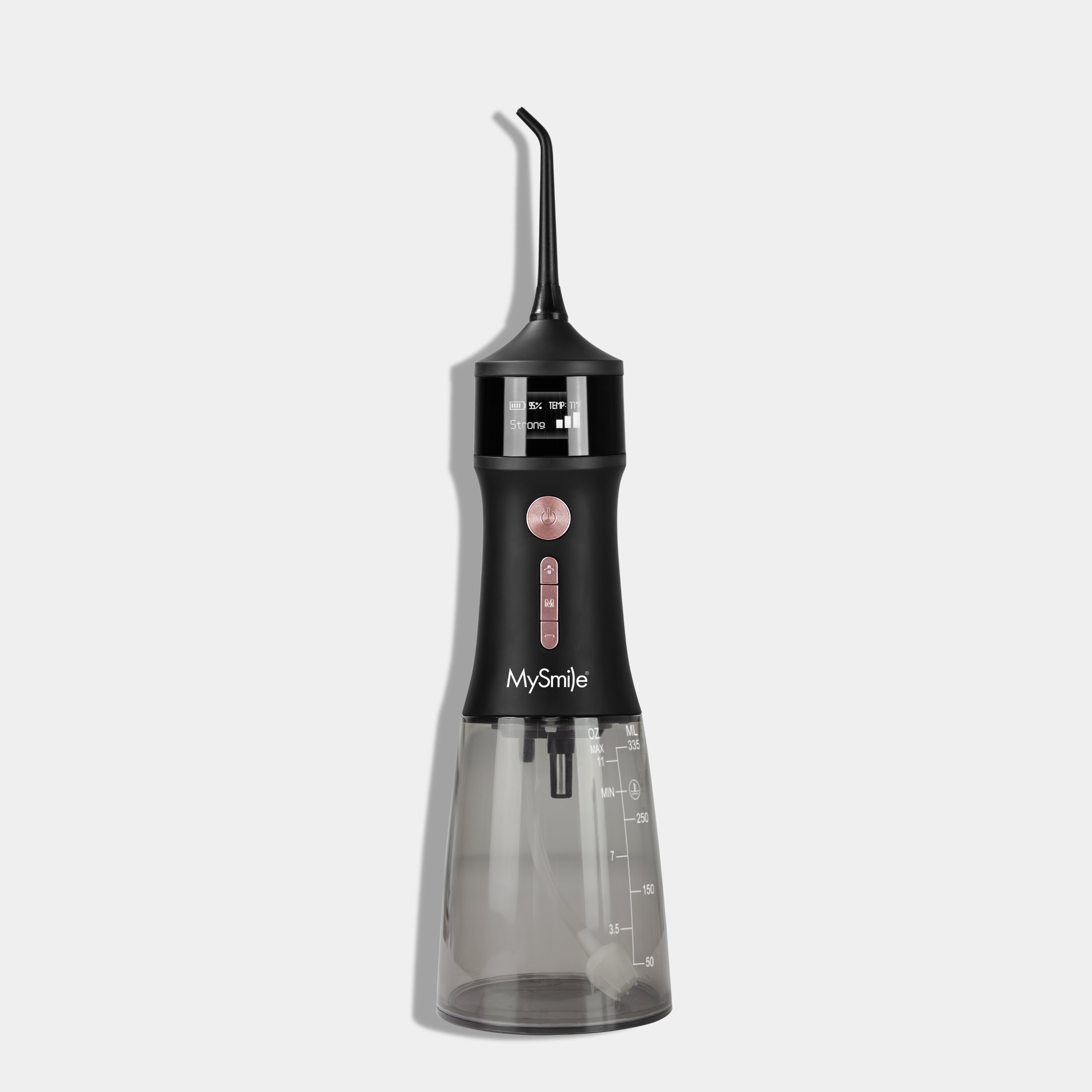
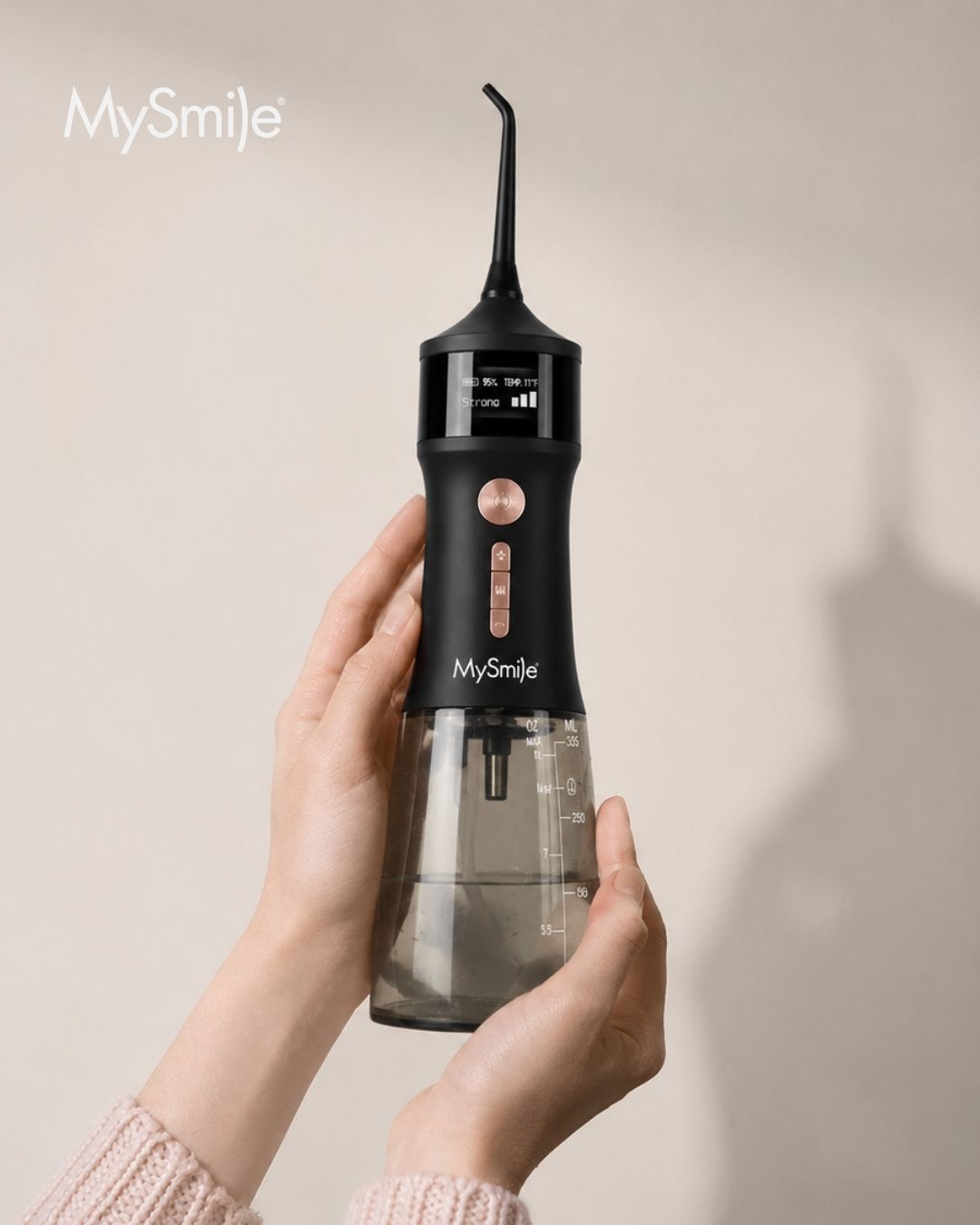
The MySmile LP221 Cordless Professional Water Flosser offers Soft, Normal, Strong and Pulse modes, along with adjustable pressure levels. Its OLED display shows the selected mode, pressure, battery level and water temperature, making it easier to find and repeat a comfortable setting.
The cordless design is convenient for smaller bathrooms and travel, while the rotating tips help reach around braces, dental work and difficult back teeth. It also includes a built-in UVC cleaning cycle designed to help maintain the reservoir and jet tips between uses.
For beginners, starting on Soft mode with lukewarm water can make water flossing feel significantly less overwhelming.
A Simple Anxiety-Friendly Oral Care Routine
If a long routine feels intimidating, keep it simple:
-
Fill your water flosser with lukewarm water.
-
Select the lowest comfortable pressure.
-
Trace the gumline and pause between each tooth.
-
Brush for two minutes with a soft-bristled toothbrush.
-
Clean and empty the water-flosser reservoir.
That is enough to create a realistic starting point. Once the routine feels familiar, you can adjust it based on your dentist’s recommendations.
When Should You Talk to a Dentist?
Speak with your dentist or dental hygienist if:
-
Water flossing consistently causes pain
-
Your gums continue bleeding
-
You notice swelling or gum recession
-
You have loose or damaged dental work
-
You frequently develop cavities between teeth
-
You have periodontal disease or deep gum pockets
-
You are unsure which pressure or tip to use
Your dental professional can check your technique and recommend whether water flossing, string floss, interdental brushes or a combination would work best for your mouth.
The Bottom Line
If you hate string flossing, a water flosser can offer a more comfortable and approachable way to clean between your teeth.
It is important to be honest about what you will actually use. A complicated routine that causes fear, discomfort or frustration is unlikely to last. A gentle water-flossing habit that you can repeat every day may be a much better place to begin.
You do not need to create a perfect routine overnight. Start with lukewarm water, the lowest comfortable pressure and one slow pass around your gumline. Small, repeatable steps can make oral care feel less stressful—and help you build a cleaner, healthier smile over time.
Frequently Asked Questions
How often should I use a water flosser?
Most people can use a water flosser once daily as part of their normal oral-care routine. Follow the device instructions and any personalized recommendations from your dentist.
Should I water floss before or after brushing?
Many people prefer water flossing before brushing so loosened food debris can be rinsed away before toothpaste is applied. The most important factor is choosing an order you can follow consistently.
What pressure should beginners use?
Begin with the lowest pressure setting. Increase it gradually only if your gums feel comfortable and the water stream remains easy to control.
Can I use mouthwash in my water flosser?
Only use additives specifically approved for your device. The MySmile LP221 can be used with a small amount of compatible mouthwash, but the reservoir should be thoroughly flushed with clean water afterward.
Is a water flosser suitable for braces?
Water flossers can be particularly useful for flushing around brackets, wires and other areas that are difficult to reach with string floss. An orthodontist can recommend the most appropriate tip and pressure for your braces.