
Water Flosser vs. String Floss: Which Is Better for Your Teeth?
Brushing twice a day is essential, but your toothbrush cannot completely clean the narrow spaces between your teeth. Food particles and plaque can remain around the gumline and between teeth, increasing the risk of cavities, bad breath, and gum inflammation.
That is why interdental cleaning—the process of cleaning between your teeth—is an important part of a complete oral care routine.
String floss has long been the traditional option, but water flossers have become increasingly popular because they are convenient, gentle, and easier for many people to use. So, when comparing a water flosser vs. string floss, which one is better?
The short answer is that both can support healthy teeth and gums. The best choice depends on your teeth, dental work, comfort level, and which method you can use correctly every day.
Why Cleaning Between Your Teeth Matters
Even a high-quality toothbrush cannot effectively reach every surface between your teeth. Plaque left in these areas may eventually harden into tartar, which can only be removed by a dental professional.
According to the American Dental Association, brushing twice daily and cleaning between the teeth with floss or another interdental cleaner once a day can help remove plaque and debris from hard-to-reach areas.
Daily interdental cleaning may help:
- Remove trapped food particles
- Reduce plaque buildup between teeth
- Support healthier gums
- Lower the risk of tooth decay
- Keep your mouth feeling cleaner
- Improve the freshness of your breath
Consistency matters more than choosing a method that is difficult or uncomfortable for you to maintain.
What Is a Water Flosser?
A water flosser is an oral care device that directs a controlled, pulsating stream of water between the teeth and along the gumline.
The water helps loosen and flush away food particles, plaque, and everyday debris from areas that may be difficult to clean with a toothbrush alone. Because it does not require threading floss between every tooth, many people find water flossing easier to add to their daily routines.
Water flossers can be especially helpful for people with:
- Braces or orthodontic appliances
- Dental implants
- Crowns, bridges, or veneers
- Limited hand mobility
- Sensitive gums
- Difficulty using string floss consistently
If you have recent dental work, active gum disease, or specific periodontal concerns, ask your dentist or dental hygienist which interdental cleaning method is best for you.
How Does String Floss Work?
String floss removes plaque by physically sliding against the sides of each tooth and slightly under the gumline.
When used correctly, the floss should curve around each tooth in a C-shape. This allows it to make contact with the tooth surface instead of simply moving up and down through the gap.
String floss can be particularly useful for:
- Tight spaces between teeth
- Directly wiping the sides of the teeth
- People who already have good flossing technique
- Travel or quick cleaning without a powered device
However, flossing can be difficult for people with braces, bridges, crowded teeth, dexterity limitations, or sensitive gums. Poor technique may also leave plaque behind or cause discomfort.
Water Flosser vs. String Floss: Key Differences
| Feature | Water Flosser | String Floss |
|---|---|---|
| Cleaning method | Pulsating water flushes between teeth and along the gumline | Floss physically wipes the sides of each tooth |
| Ease of use | Often easier for beginners and people with limited mobility | Requires more hand control and proper technique |
| Braces and dental work | Convenient for cleaning around brackets, wires, bridges, and implants | May require threaders or specialized floss |
| Sensitive gums | Adjustable pressure can provide a gentler experience | May feel uncomfortable if used too aggressively |
| Portability | Cordless models are travel-friendly but require charging | Extremely compact and requires no power |
| Cost | Higher initial cost | Low initial cost |
| Maintenance | Reservoir and tips require regular cleaning | Single-use and disposable |
Is a Water Flosser More Effective Than String Floss?
There is no universal winner for every person.
String floss makes direct contact with the sides of the teeth, making it useful for physically disrupting plaque in tight spaces. A water flosser uses pulsating water to clean around the teeth and gumline and may be easier to use consistently.
Some clinical research has found that water flossing, when combined with toothbrushing, can improve measures of gingival bleeding, gum inflammation, and plaque. For example, a 2023 randomized clinical trial reported greater improvements in several gum-health measurements among participants using a water flosser compared with participants using string floss over four weeks.
However, broader reviews have found that the available evidence comparing interdental cleaning devices remains limited and is often based on short-term studies. This means it is more accurate to say that water flossers and string floss are both useful tools—not that one method is always superior.
The most effective option is usually the one you can use thoroughly and consistently.
Can a Water Flosser Replace String Floss?
For many people, a water flosser can serve as their primary daily interdental cleaner. It is especially practical when string floss is uncomfortable, difficult to use, or frequently skipped.
However, your dentist may recommend using string floss, an interdental brush, or a combination of tools if you have:
- Very tight spaces between certain teeth
- Gum disease or deeper periodontal pockets
- Food traps caused by tooth spacing
- Specific dental restorations
- Areas where plaque continues to accumulate
A water flosser should complement brushing—not replace it. Continue brushing twice a day for two minutes with a soft-bristled toothbrush.
Who May Benefit Most From a Water Flosser?
People With Braces
Brackets and wires create additional spaces where food and plaque can collect. A water flosser can make it easier to clean around orthodontic hardware without repeatedly threading string floss under each wire.
People With Implants, Crowns, or Bridges
Dental restorations can create areas that are harder to reach with regular floss. Water flossing can help clean around these spaces, although you should follow any care instructions provided by your dentist.
People With Sensitive Gums
Adjustable water pressure allows beginners to start gently and increase the intensity gradually. Lukewarm water may also feel more comfortable than cold water for sensitive teeth and gums.
People With Limited Dexterity
Arthritis, mobility limitations, or difficulty controlling string floss can make traditional flossing challenging. A cordless water flosser may be easier to hold and guide along the gumline.
People Who Do Not Floss Consistently
A daily routine only works when you actually follow it. If convenience makes you more likely to clean between your teeth every day, a water flosser may be the more realistic choice.
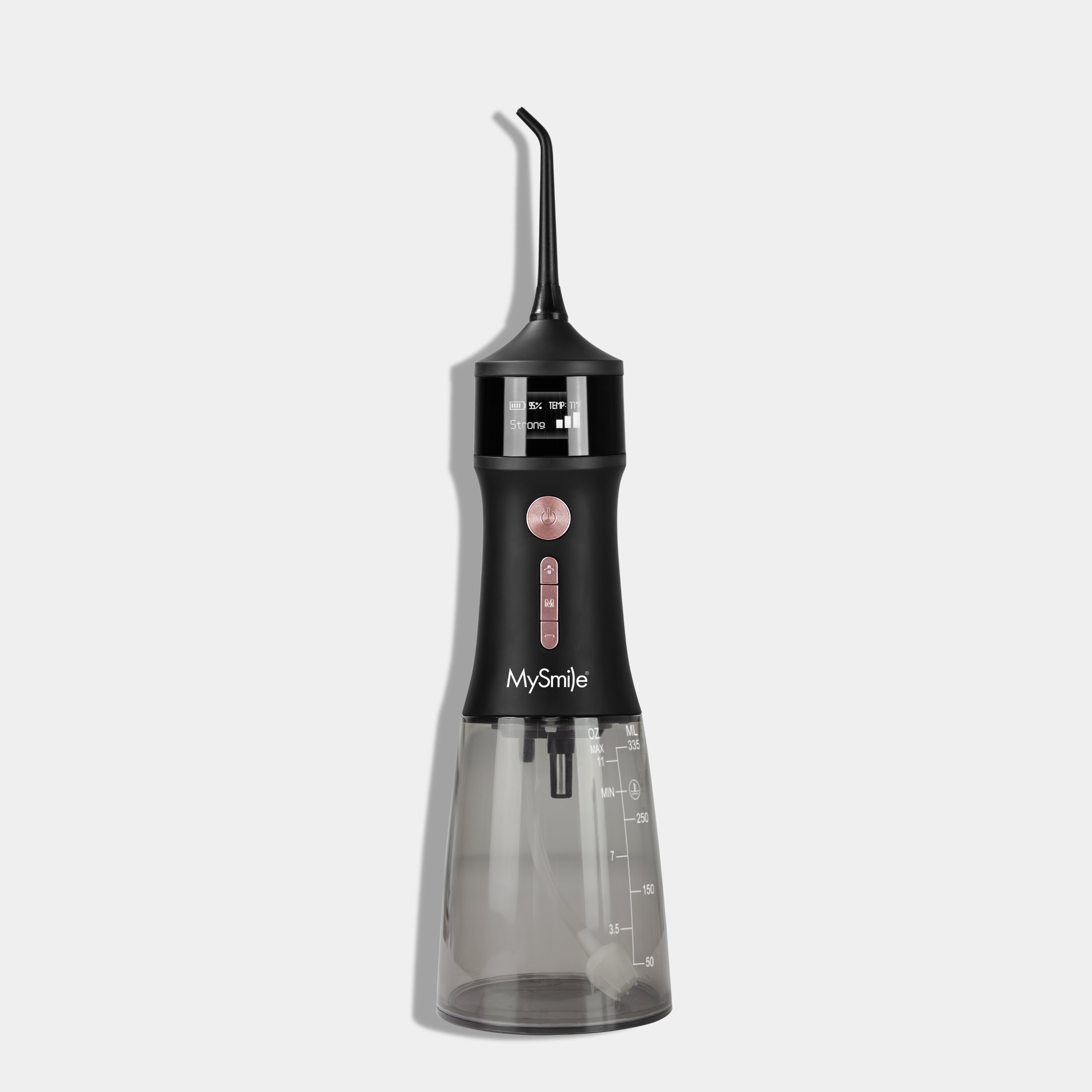
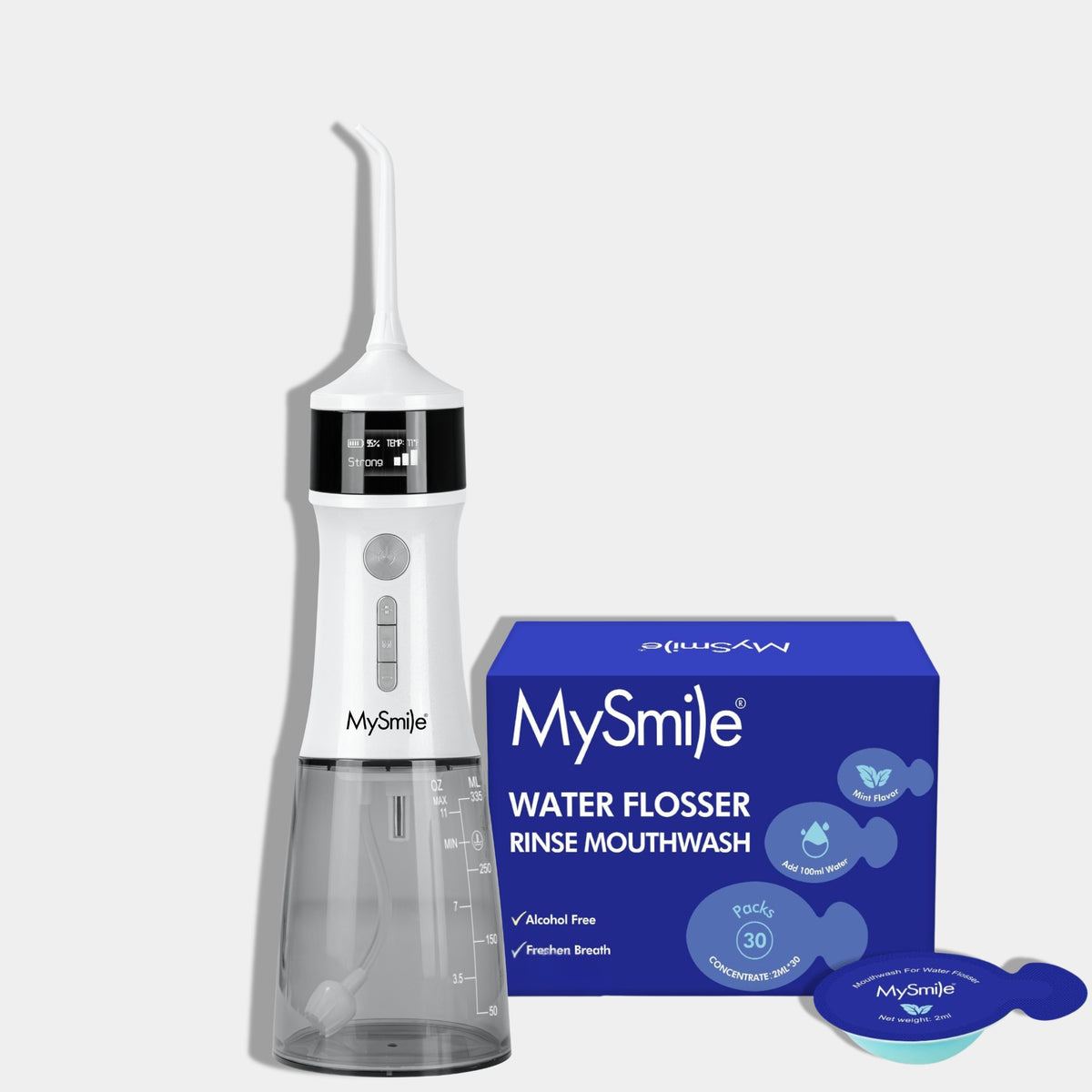
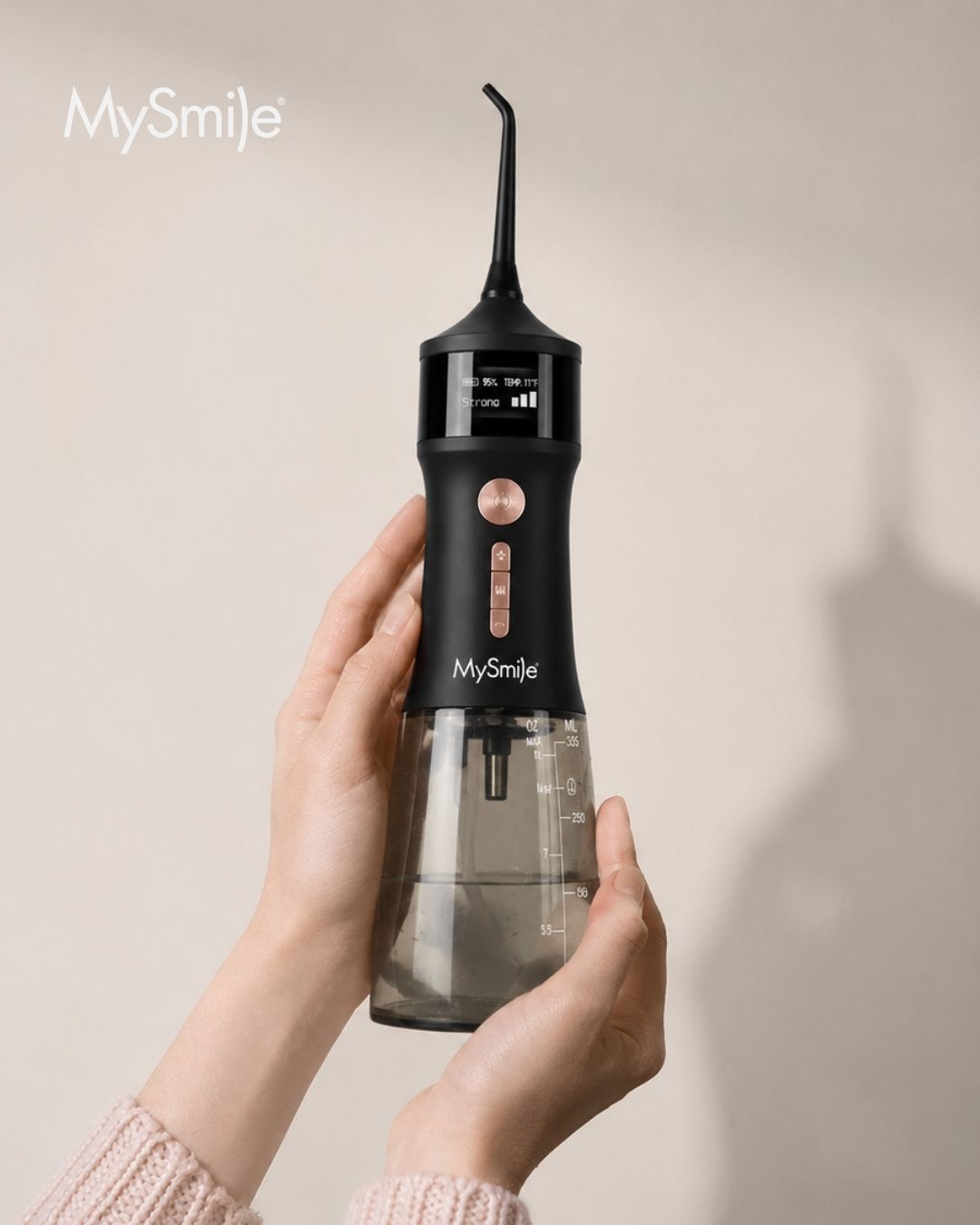
Meet the MySmile LP221 Cordless Professional Water Flosser
The MySmile LP221 Cordless Professional Water Flosser is designed to provide customizable cleaning for different teeth and gum sensitivities.
Its features include:
- 2,000–2,800 water pulses per minute
- Adjustable pressure from 40–150 PSI
- Soft, Normal, Strong, and Pulse modes
- Three adjustable pressure levels
- Up to 10 customizable flossing combinations
- An easy-to-read OLED display
- A 335 mL water reservoir
- Rotatable jet tips for hard-to-reach areas
- A built-in 120-second UVC care cycle
- Cordless, rechargeable operation
- Multiple tips and a travel pouch
The adjustable settings make it easy to begin with a gentler routine and gradually find the pressure that feels comfortable for your teeth and gums.
Ready to upgrade your daily routine? Shop the MySmile LP221 Water Flosser.
How to Use the MySmile LP221 Water Flosser
Correct technique can make water flossing more comfortable and effective.
1. Fill the Reservoir
Fill the reservoir with clean, lukewarm water. Lukewarm water is generally more comfortable for people with sensitive teeth.
2. Attach the Appropriate Tip
Insert the jet tip securely. Choose the attachment that best matches your oral care needs and follow the product instructions for specialized tips.
3. Begin With a Gentle Setting
If you are new to water flossing, start with Soft mode and a low pressure level. Increase the pressure gradually only when it feels comfortable.
Higher pressure is not automatically better. The goal is controlled, comfortable cleaning without pain or gum injury.
4. Lean Over the Sink
Place the tip in your mouth before turning on the device. Lean over the sink and keep your lips partially closed around the tip so the water can drain into the sink without splashing.
5. Follow the Gumline
Aim the stream toward the gumline at approximately a 90-degree angle. Move slowly from tooth to tooth, pausing briefly between teeth.
Clean both the front and back surfaces of your upper and lower teeth. Pay extra attention to braces, restorations, and areas where food tends to become trapped.
6. Empty and Rinse the Reservoir
After use, turn off the device, remove the tip, and empty any remaining water. Rinse the reservoir and allow the parts to air-dry.
How Often Should You Use a Water Flosser?
Most people can use a water flosser once a day as part of their regular oral hygiene routine. The best time is whenever you are most likely to use it consistently.
You can water floss before or after brushing. According to the ADA, either order is acceptable as long as you clean thoroughly.
If you have braces, implants, gum disease, or ongoing dental treatment, your dentist may recommend a different frequency or technique.
How to Keep Your LP221 Clean
Regular care helps keep your water flosser performing properly.
- Empty the reservoir after every use.
- Rinse the reservoir and jet tip with clean water.
- Allow removable components to air-dry.
- Wipe the exterior with a soft, damp cloth.
- Run the built-in UVC care cycle according to the product instructions.
- Check the reservoir and tip for mineral buildup, especially if you have hard water.
- Follow the user manual for deeper cleaning and descaling.
- Replace jet tips every three to six months, or sooner if they become worn or damaged.
- Never immerse the powered handle or charging components in water.
Common Water-Flossing Mistakes to Avoid
Starting With Too Much Pressure
Beginning at the strongest setting may cause discomfort or unnecessary splashing. Start low and adjust gradually.
Moving Too Quickly
Simply sweeping the tip across your mouth may miss important areas. Pause briefly between teeth and follow the entire gumline.
Aiming Away From the Gumline
The stream should be directed where the teeth and gums meet—not only at the center of the tooth.
Using Water Flossing Instead of Brushing
A water flosser cleans between teeth, but it does not replace twice-daily brushing.
Ignoring Persistent Gum Bleeding
Some mild bleeding may occur when you first improve your interdental cleaning routine, especially if your gums are already inflamed. However, heavy, painful, or persistent bleeding should be evaluated by a dental professional.
Frequently Asked Questions
Is a water flosser good for everyday use?
Yes. Most people can use a water flosser once a day as their daily interdental cleaning method. Use a comfortable pressure and follow the device instructions.
Can I use a water flosser if I have sensitive gums?
Yes. Start with lukewarm water, Soft mode, and the lowest pressure level. Stop if you experience pain, and speak with your dentist if sensitivity or bleeding continues.
Can a water flosser remove tartar?
No. A water flosser can help remove plaque and food debris, but it cannot remove hardened tartar. Tartar must be removed by a dental professional.
Is a water flosser safe for braces?
Water flossers can be particularly convenient for cleaning around brackets and wires. Follow your orthodontist’s instructions and use the appropriate tip and pressure setting.
Should I water floss before or after brushing?
Either order is acceptable. Some people prefer water flossing first to loosen debris before brushing, while others use it afterward as a final cleaning step. Consistency and thorough technique matter most.
Can I put mouthwash in the reservoir?
Use plain lukewarm water unless the product instructions specifically allow another solution. Certain mouthwashes may require dilution and could leave residue inside the device. Always rinse the reservoir thoroughly afterward.
What should I do if my gums bleed?
Do not increase the pressure. Use a gentle setting and make sure the tip is not being pressed into the gum tissue. If bleeding is heavy, painful, or does not improve, schedule an appointment with your dentist.
The Bottom Line
Water flossers and string floss can both support cleaner teeth and healthier gums. String floss provides direct contact with the sides of each tooth, while a water flosser offers a convenient, adjustable way to flush around the gumline, dental work, and hard-to-reach spaces.
For people who struggle with traditional flossing—or simply want a more comfortable and consistent routine—the MySmile LP221 Cordless Professional Water Flosser provides customizable pressure, multiple cleaning modes, cordless convenience, and an easy-to-read display.
Whichever method you choose, the most important step is to clean between your teeth every day, brush twice daily, and continue regular dental checkups.