
Purple toothpaste has become one of the biggest oral care trends on TikTok, Instagram, and beauty routines everywhere. The reason is simple: it promises a quick, visibly brighter smile without strips, trays, or long waiting time.
But the real question is: is purple toothpaste safe for your teeth?
The short answer: yes, purple toothpaste is generally safe when used as directed, especially when it is non-abrasive and made for everyday oral care. However, it is important to understand what purple toothpaste actually does. It does not bleach your teeth or permanently change your natural tooth shade. Instead, it uses color-correcting pigments to temporarily neutralize yellow tones, helping your smile look brighter right after brushing.
If you want a quick confidence boost before photos, work, school, dates, events, or content days, purple toothpaste can be a smart addition to your routine. Just think of it as a color corrector for your smile, not a replacement for deeper teeth whitening treatments or regular dental care.
What Is Purple Toothpaste?
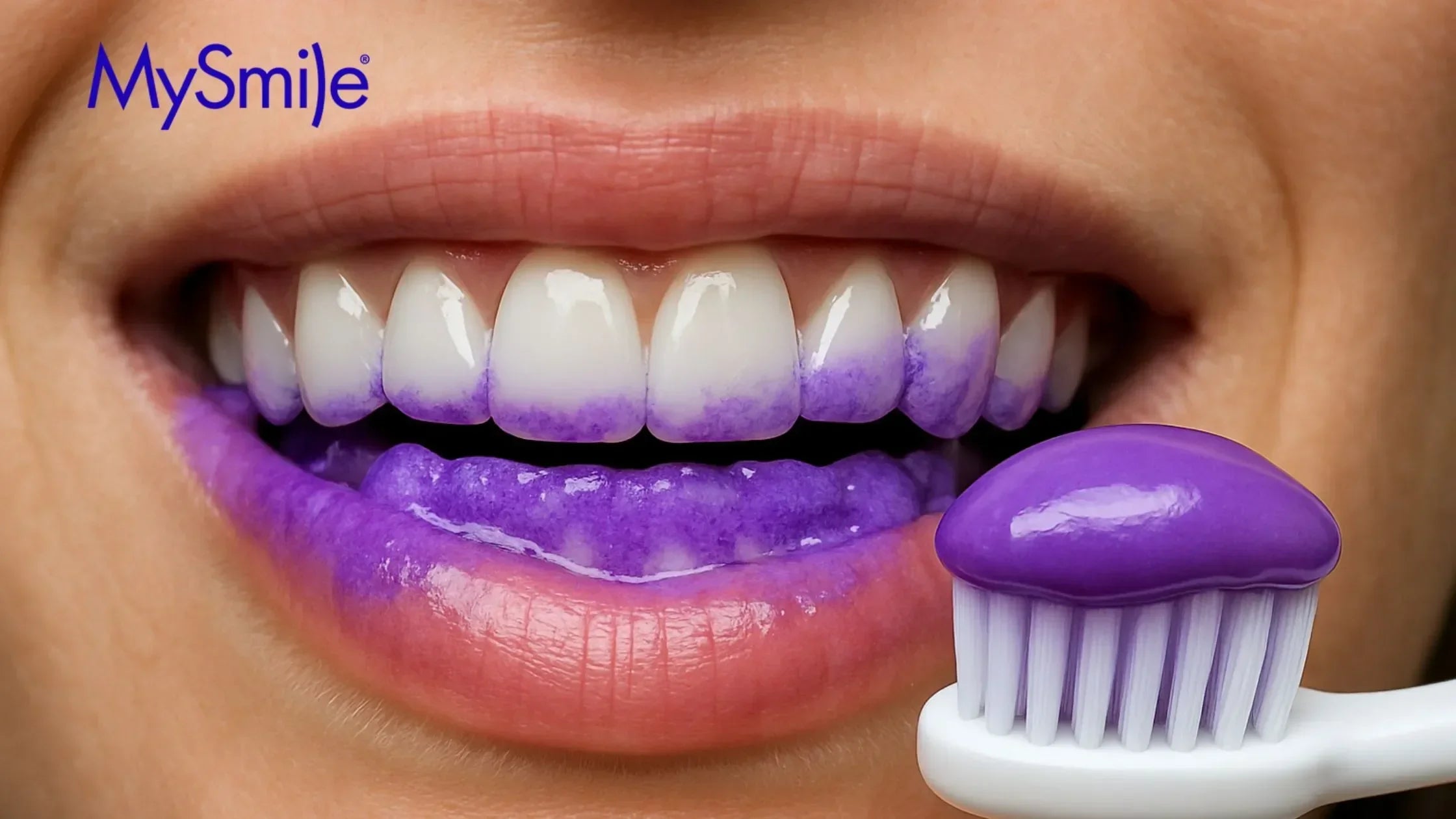
Purple toothpaste is a color-correcting toothpaste designed to help yellow-looking teeth appear brighter. It works using the same basic color theory behind purple shampoo for blonde hair or color-correcting makeup.
On the color wheel, purple sits opposite yellow. When purple pigments are applied to the surface of teeth, they can help visually balance yellow tones. This creates the appearance of a cleaner, brighter, and more neutral smile.
That is why purple toothpaste is often called:
-
Purple color-correcting toothpaste
-
Purple whitening toothpaste
-
Purple toothpaste for yellow teeth
-
Color corrector toothpaste
-
Instant brightening toothpaste
The key thing to know is that the effect is mostly cosmetic and temporary. Purple toothpaste can help your teeth look less yellow in the moment, but it does not remove deep stains the same way peroxide-based whitening products can.
Is Purple Toothpaste Safe for Enamel?
Purple toothpaste can be safe for enamel when the formula is gentle, non-abrasive, and used properly. Since the main brightening effect comes from color-correcting pigments rather than harsh scrubbing or bleaching, many purple toothpastes are designed to be gentler than traditional whitening products.
However, not all formulas are the same. Some whitening toothpastes may rely heavily on abrasive ingredients to polish away surface stains. Over time, aggressive brushing or highly abrasive formulas can be rough on enamel.
For a safer everyday option, look for a purple toothpaste that is:
-
Non-abrasive
-
Gentle on enamel
-
Designed for daily brushing
-
Made without harsh bleaching agents
-
Easy to rinse without leaving heavy residue
-
Supportive of everyday oral hygiene
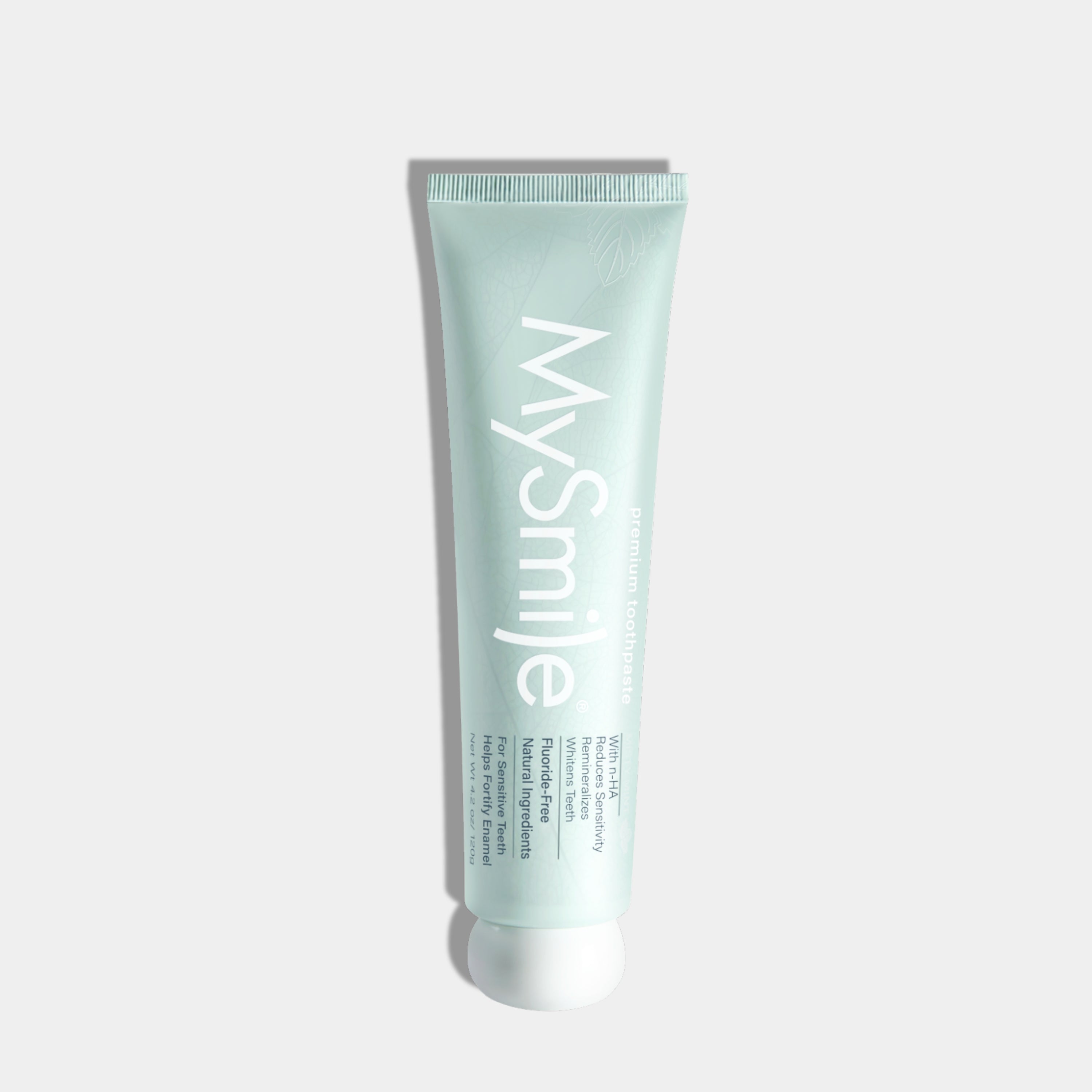
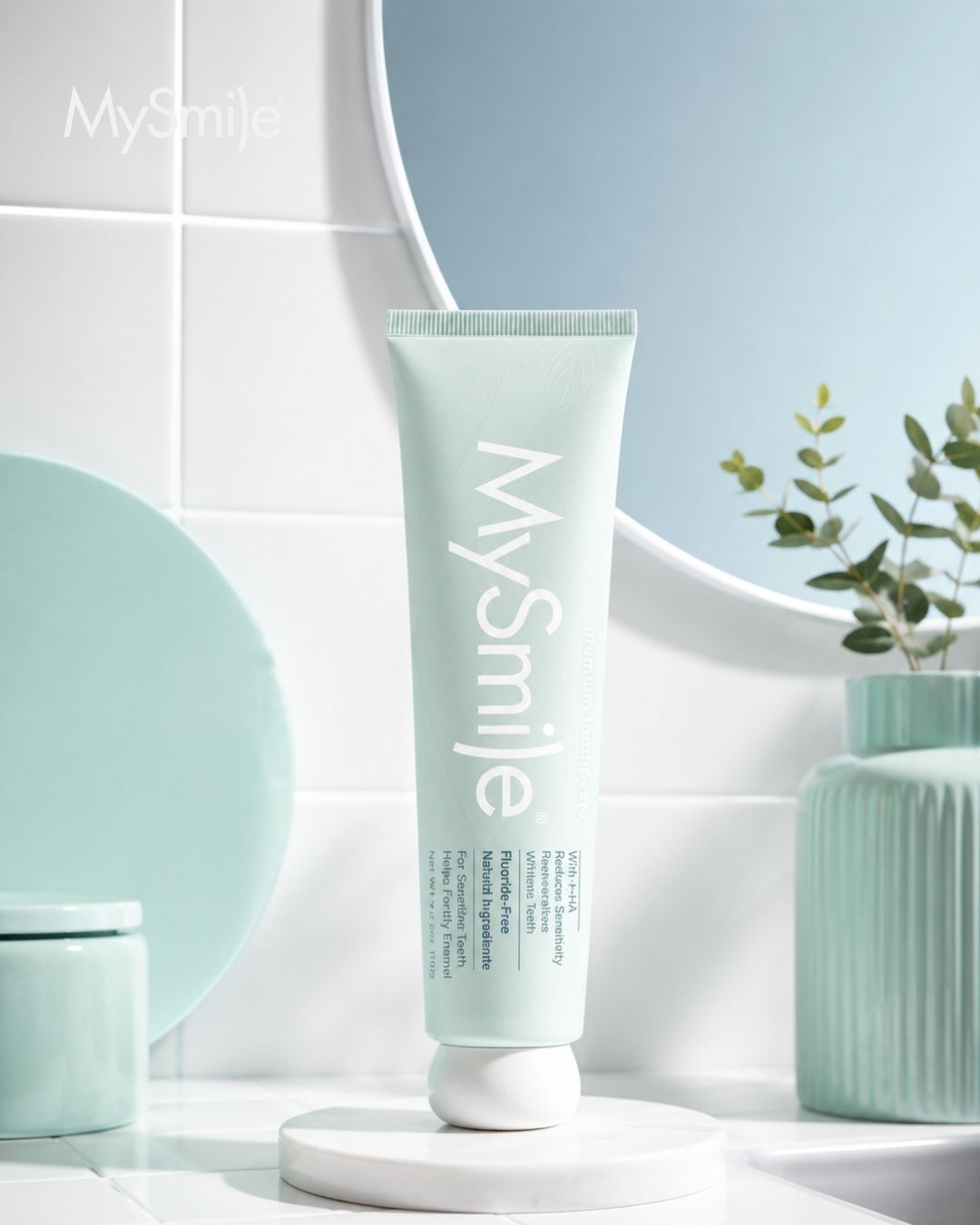
A product like MySmile Purple Color Correcting Toothpaste is designed to instantly neutralize yellow tones with purple color-correcting pigments while staying gentle for daily oral care. It is also fluoride-free, non-abrasive, and infused with nano-hydroxyapatite to support enamel care.
Does Purple Toothpaste Actually Whiten Teeth?
This is where the wording matters.
Purple toothpaste can make teeth look whiter, but it does not “whiten” teeth in the same way traditional whitening gels, strips, or professional treatments do.
Traditional whitening products usually use ingredients like hydrogen peroxide or carbamide peroxide to lift stains from the tooth surface and deeper layers. Purple toothpaste works differently. It helps cancel out yellow tones on the surface of your teeth, creating a brighter-looking effect.
So, does purple toothpaste work?
Yes — if your goal is instant visible brightening and reducing the appearance of yellow tones.
No — if you expect it to permanently bleach your teeth several shades lighter.
The best way to understand it: purple toothpaste is like a beauty filter for your smile. It helps your teeth look brighter right away, but the result is temporary and works best as part of a consistent oral care routine.
Purple Toothpaste vs. Whitening Toothpaste: What’s the Difference?
Purple toothpaste and whitening toothpaste are often grouped together, but they do not always work the same way.
Purple toothpaste uses violet or purple pigments to visually neutralize yellow tones. It is best for quick brightening, photo-ready smiles, and reducing the appearance of dullness.
Traditional whitening toothpaste usually focuses on removing surface stains from coffee, tea, wine, soda, or everyday foods. Some formulas use polishing agents, while others may include peroxide-based ingredients.
Whitening strips or gels use peroxide-based whitening ingredients to lift stains more deeply. These usually offer more noticeable long-term whitening results, but they can also be more likely to cause temporary sensitivity for some users.
If your teeth are mildly yellow or look dull in photos, purple toothpaste may be enough for a quick refresh. If you want a more dramatic shade change, you may want to pair purple toothpaste with a whitening kit, whitening strips, or a dentist-recommended whitening routine.
Can You Use Purple Toothpaste Every Day?
Yes, many people can use purple toothpaste daily as long as the formula is designed for daily use and you follow the directions on the label.
For best results, use it like a normal toothpaste:
-
Apply a pea-sized amount to a soft-bristled toothbrush.
-
Brush gently for 2 minutes.
-
Focus on areas with visible yellow tones.
-
Spit out after brushing.
-
Avoid brushing too aggressively.
The key is not to overdo it. More product does not always mean better results. Brushing harder will not make your teeth brighter faster, and it may irritate your gums.
For everyday use, gentle technique matters just as much as the toothpaste.
Can Purple Toothpaste Cause Sensitivity?
Purple toothpaste is generally considered low-risk when used correctly, but sensitivity is still possible depending on your teeth, gums, brushing habits, and the formula you choose.
Possible side effects may include:
-
Mild tooth sensitivity
-
Temporary gum irritation
-
Purple residue if too much product is used
-
Discomfort if brushing too hard
-
Irritation for people sensitive to certain dyes, flavors, or ingredients
If you already have sensitive teeth, receding gums, enamel wear, cavities, or active dental issues, start slowly and pay attention to how your mouth feels. If discomfort continues, stop using the product and check with your dentist.
A gentle, non-abrasive formula is usually a better option for people who want a brighter-looking smile without the intensity of peroxide-based whitening.
Does Purple Toothpaste Stain Your Teeth?
When used correctly, purple toothpaste should not permanently stain your teeth. The purple pigments are meant to rinse away after brushing while leaving a temporary color-correcting effect.
That said, using too much product or not rinsing enough can sometimes leave a temporary purple tint around the gums, tongue, sink, or toothbrush. This is usually easy to rinse away.
To avoid residue:
-
Use only a pea-sized amount
-
Brush gently
-
Spit thoroughly after brushing
-
Rinse your toothbrush well
-
Wipe the sink after use if needed
If your teeth have rough surfaces, heavy plaque buildup, dental bonding, veneers, crowns, or restorations, pigment may behave differently. Purple toothpaste works best on clean natural teeth, not on artificial dental materials.
Who Should Use Purple Toothpaste?
Purple toothpaste is a great option for people who want a fast, low-effort way to make their smile look brighter.
It may be especially useful if you:
-
Drink coffee, tea, or red wine
-
Notice yellow tones in photos
-
Want a quick smile refresh before events
-
Prefer a non-bleaching brightening option
-
Have mild surface dullness
-
Want a daily toothpaste that supports a brighter-looking smile
-
Create content and want your smile to look more polished on camera
It is not the best solution if you have deep internal staining, untreated cavities, gum disease, or heavy tartar buildup. In those cases, a dental cleaning or dentist-guided whitening plan may be more effective.
How to Get the Best Results From Purple Toothpaste
For the best visible brightening effect, use purple toothpaste consistently and pair it with good oral hygiene habits.
Here are a few simple tips:
Brush gently for 2 minutes.
A soft-bristled toothbrush helps clean effectively without being rough on enamel or gums.
Use it before photos or events.
Purple toothpaste is great for quick, temporary brightening before a big moment.
Stay consistent.
Using it regularly can help keep your smile looking fresh, especially if you drink staining beverages.
Do not skip flossing.
A brighter smile still needs clean teeth and healthy gums. Flossing or water flossing helps remove buildup between teeth where brushing cannot fully reach.
Limit staining foods and drinks when possible.
Coffee, tea, red wine, dark sauces, and soda can make teeth appear more yellow over time.
Visit your dentist regularly.
Purple toothpaste can improve the look of your smile, but it does not replace professional cleanings or dental checkups.
Product Recommendation: MySmile Purple Color Correcting Toothpaste
If you want a gentle purple toothpaste for daily use, try MySmile Purple Color Correcting Toothpaste.
It is designed to help instantly neutralize yellow tones and enhance the appearance of a brighter, more balanced smile without harsh bleaching. The formula is non-abrasive, fluoride-free, and infused with nano-hydroxyapatite to support enamel care.
Key benefits include:
-
Purple color-correcting pigments to reduce the look of yellow tones
-
Immediate visible brightening effect
-
Non-abrasive formula
-
Gentle for daily use
-
Fresh minty finish
-
Nano-hydroxyapatite for enamel care support
-
Great for coffee drinkers, photo days, events, and everyday smile confidence
Use it morning and night, or whenever your smile needs a quick refresh.
Shop MySmile Purple Color Correcting Toothpaste
FAQ: Is Purple Toothpaste Safe?
Is purple toothpaste safe for daily use?
Yes, purple toothpaste can be safe for daily use when the formula is gentle, non-abrasive, and used as directed. Avoid brushing too hard, and stop using it if you notice ongoing irritation or sensitivity.
Does purple toothpaste permanently whiten teeth?
No. Purple toothpaste does not permanently whiten teeth like peroxide-based whitening treatments. It helps teeth appear brighter by temporarily neutralizing yellow tones on the surface.
Is purple toothpaste bad for enamel?
A non-abrasive purple toothpaste should be gentle on enamel when used properly. The biggest risk usually comes from brushing too hard or using overly abrasive whitening formulas.
Can purple toothpaste help yellow teeth?
Yes, purple toothpaste can help yellow-looking teeth appear less yellow by using purple pigments to color-correct warm tones. It works best for mild yellow tones and surface dullness.
How long do purple toothpaste results last?
The brightening effect is temporary. Results may last through part of the day, but they can fade after eating, drinking, or rinsing. For best results, use it consistently as part of your brushing routine.
Can I use purple toothpaste with whitening strips?
Yes, many people use purple toothpaste between whitening treatments to maintain a brighter-looking smile. If you experience sensitivity from whitening strips, give your teeth a break and use gentle products.
Is purple toothpaste better than whitening strips?
It depends on your goal. Purple toothpaste is better for quick, temporary brightening. Whitening strips are better for deeper, longer-lasting whitening results.
Final Thoughts: Should You Try Purple Toothpaste?
Purple toothpaste is safe for most people when used correctly, and it can be a fun, easy way to make your smile look instantly brighter. Just remember: it is a color-correcting product, not a permanent bleaching treatment.
If your goal is a quick refresh, less visible yellow tones, and a more photo-ready smile, purple toothpaste is absolutely worth adding to your routine.
For a gentle daily option, try MySmile Purple Color Correcting Toothpaste and give your smile that clean, bright, camera-ready finish.