
Are Water Flossers Actually Useful? Benefits, Evidence & How to Use One
The short answer: yes, water flossers can be genuinely useful. They use a controlled, pulsating stream of water to clean between teeth and along the gumline—areas a toothbrush may not fully reach. They can be especially helpful for people with braces, bridges, implants, sensitive gums, or limited hand mobility.
However, a water flosser is not a miracle device. It cannot remove hardened tartar, whiten teeth, treat cavities, or replace professional dental care. Whether it should replace string floss also depends on your teeth, gums, dental work, and how effectively you use each tool.
This guide explains what water flossers actually do, what current research says, who may benefit most, and how to use one correctly.

Key Takeaways
-
Water flossers help flush away food debris and disrupt plaque between teeth and around the gumline.
-
Research suggests they can be as effective as—or sometimes more effective than—string floss for certain users and hard-to-reach areas.
-
They are particularly convenient for braces, bridges, implants, crowns, and people who find string floss difficult.
-
A water flosser does not remove hardened tartar or permanently whiten teeth.
-
The best interdental cleaner is generally one you can use correctly and consistently every day.
-
Persistent gum bleeding, swelling, pain, or bad breath should be evaluated by a dental professional.
What Is a Water Flosser?
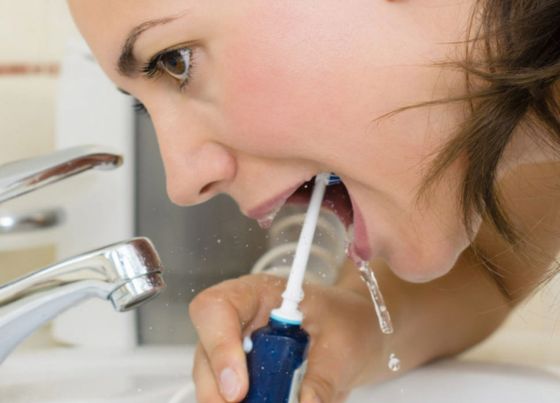
A water flosser, also known as an oral irrigator or dental water jet, is a powered device that directs a narrow stream of pulsating water between the teeth and around the gumline.
Most water flossers include:
-
A refillable water reservoir
-
A motorized pump
-
An adjustable pressure system
-
A removable or rotating jet tip
-
Multiple cleaning modes or pressure levels
Unlike string floss, which physically rubs against the sides of each tooth, a water flosser uses water pressure and pulsation to loosen food particles and disturb plaque in areas that may be difficult to reach with a toothbrush.
Do Water Flossers Really Work?
Yes—but the most accurate answer is that their effectiveness depends on the device, technique, pressure setting, and the individual using it.
The American Dental Association explains that water flossers carrying the ADA Seal of Acceptance have been evaluated for safely removing plaque and helping reduce gingivitis. The ADA also recognizes water flossers as a possible option for people who have difficulty using traditional floss or who have dental work such as braces or fixed bridges.
A systematic review comparing water flossers with dental floss examined seven randomized controlled trials. Four studies found greater plaque reduction with water flossers, while three found no significant difference between water flossing and string floss. The authors concluded that water flossers could be an effective alternative for people with limited manual dexterity, orthodontic appliances, or dental prostheses.
It is important to keep that evidence in perspective. Many water-flossing studies are relatively short, use different devices and measurement methods, and do not tell us as much about long-term outcomes such as cavities or advanced gum disease. A broader ADA review of interdental cleaning research describes the available evidence for oral irrigators as promising but still limited and inconsistent.
The practical takeaway: water flossers are useful tools, but they work best as part of a complete routine—not as a replacement for brushing, dental checkups, or treatment.
6 Evidence-Based Benefits of Water Flossing
1. Cleans Areas Your Toothbrush May Miss
Even a high-quality toothbrush cannot fully clean the narrow spaces between teeth. A water flosser directs water into these areas to help loosen food particles and disrupt soft plaque.
It can also reach around back teeth, uneven spacing, and other areas that may be awkward to clean with string floss.
2. Makes Cleaning Around Braces Easier
Brackets and wires create extra spaces where food and plaque can collect. Traditional floss can still be effective, but it often requires a floss threader or specialized orthodontic floss.
A water flosser can move around brackets, wires, and bands more easily, making it a convenient addition to an orthodontic oral-care routine. Your orthodontist may still recommend string floss or an interdental brush for certain surfaces.
3. Helps Around Bridges, Crowns, and Implants
Fixed bridges and some implant-supported restorations can be difficult to clean with standard floss. A water flosser can help flush debris from around and underneath dental work.
People with implants or periodontal concerns should ask their dentist which tip and pressure level are appropriate. A water flosser supports daily cleaning, but it does not replace the specialized care recommended by a dental professional.
4. May Support Healthier Gums
Removing plaque from around the gumline can help reduce the irritation associated with gingivitis. Water flossing may also feel gentler than string floss for people who tend to snap floss into the gums or use an aggressive technique.
If your gums bleed, do not simply increase the pressure. Begin with a gentle setting and read our guide to bleeding gums when flossing to understand when bleeding may need professional attention.
5. Can Be Easier for People With Limited Dexterity
Arthritis, mobility conditions, hand injuries, and coordination difficulties can make wrapping and guiding string floss challenging. A water flosser usually requires less detailed finger movement and may be easier to control.
This matters because a cleaning tool only helps when it is practical enough to use consistently.
6. May Improve Daily Consistency
Some people avoid string floss because they find it uncomfortable, time-consuming, or difficult. If a water flosser makes interdental cleaning easier, that convenience can help turn occasional cleaning into a daily habit.
Consistency and correct technique are more valuable than purchasing an advanced device that rarely gets used.
Water Flosser vs. String Floss: What Is the Difference?

Both tools clean between teeth, but they work in different ways.
| Feature | Water flosser | String floss |
|---|---|---|
| Cleaning action | Pulsating water flushes debris and disrupts plaque | Floss physically rubs plaque from tooth surfaces |
| Ease of use | Often easier for braces, bridges, implants, or limited dexterity | Requires more coordination and proper C-shaped technique |
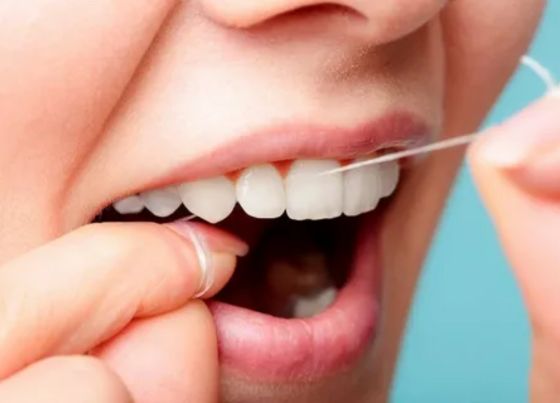
| Tight contacts | Can flush the area but does not physically scrape both tooth surfaces | Can make direct contact with tightly spaced tooth surfaces |
| Gum comfort | Adjustable pressure can feel gentler | Can irritate gums if snapped or used aggressively |
| Portability | Cordless models are travel-friendly but require more space | Very compact and requires no charging |
| Cost | Higher upfront cost | Low cost |
| Maintenance | Reservoir and tips require regular cleaning | Disposable after each use |
| Mess | May splash while learning | Generally mess-free |
For closely spaced natural teeth, correctly used string floss provides direct contact with the sides of each tooth. For braces, bridges, implants, dexterity challenges, or people who consistently avoid string floss, a water flosser may be the more practical choice.
Some people benefit from using both. For example, string floss can clean tight tooth contacts while a water flosser flushes around dental work and along the gumline. Your dentist or hygienist can help determine the best combination for your mouth.
For a deeper comparison, read Water Flosser vs. Dental Floss: Which Is Better?.
What Water Flossers Cannot Do
Understanding the limitations is just as important as understanding the benefits.
They Cannot Remove Hardened Tartar
Water flossers help remove food particles and disturb soft plaque. Once plaque hardens into tartar or calculus, it generally needs to be removed during a professional dental cleaning.
Increasing the pressure will not safely remove tartar.
They Do Not Permanently Whiten Teeth
Water flossing may remove food debris and leave the mouth looking and feeling cleaner, but it does not bleach teeth or change their natural color.
A water flosser should not be marketed as a whitening device unless it uses a separately evaluated whitening system. Never put whitening gel or hydrogen peroxide into a reservoir unless the device manufacturer and your dentist specifically instruct you to do so.
They Do Not Treat Gum Disease by Themselves
A water flosser can support plaque control, but it cannot diagnose or cure gingivitis or periodontitis. Persistent bleeding, gum recession, swelling, loose teeth, pus, pain, or chronic bad breath requires professional evaluation.
They Do Not Replace Brushing
The ADA recommends brushing twice daily for two minutes and cleaning between the teeth once a day. Water flossing is an interdental-cleaning step, not a substitute for brushing with toothpaste.
Who May Benefit Most From a Water Flosser?
A water flosser may be particularly helpful if you:
-
Wear braces or another orthodontic appliance
-
Have a permanent bridge
-
Have dental implants, crowns, or veneers
-
Find string floss painful or difficult to control
-
Have arthritis or limited hand mobility
-
Frequently trap food between teeth
-
Have sensitive gums and need adjustable pressure
-
Want a more convenient daily flossing routine
-
Travel frequently and prefer a cordless device
If you have recently had oral surgery, advanced gum disease, significant gum recession, or sensitive dental work, ask your dentist before using high pressure.
How to Use a Water Flosser Correctly
Correct technique helps improve cleaning while reducing splashing and gum irritation.
-
Fill the reservoir with lukewarm water. Very cold water may feel uncomfortable if you have sensitive teeth.
-
Attach the appropriate jet tip. Follow the manufacturer’s guidance for standard, orthodontic, periodontal, or restoration-focused tips.
-
Start with the lowest comfortable pressure. Beginners and people with sensitive gums should increase pressure gradually rather than starting on the strongest setting.
-
Lean over the sink. Place the tip in your mouth before turning the device on. Keep your lips partially closed around the tip so water can drain into the sink.
-
Aim toward the gumline. Hold the tip close to the teeth and direct the stream at approximately a 90-degree angle to the gumline unless your dental professional recommends another technique.
-
Follow the gumline slowly. Start with the back teeth and move systematically around the mouth.
-
Pause between every tooth. Spend extra time around braces, bridges, implants, or areas where food tends to collect.
-
Clean both the front and back surfaces. Do not focus only on the visible side of your smile.
-
Empty and rinse the reservoir. Allow the device to dry according to the manufacturer’s instructions.
For more detailed instructions, visit How to Use a Water Flosser.
How Often Should You Use a Water Flosser?
For most people, using a water flosser once a day is a practical starting point. The ADA recommends cleaning between your teeth daily with floss or another interdental cleaner.
Your dentist may recommend a different frequency if you have braces, implants, periodontal disease, or areas that frequently trap food.
Using excessive pressure multiple times per day is not necessarily more effective. A gentle, thorough daily routine is usually more valuable than aggressive cleaning.
Should You Water Floss Before or After Brushing?
Either order can work as long as you clean thoroughly.
Using a water flosser before brushing may loosen food and plaque before toothpaste is applied. Using it after brushing can help rinse away remaining debris. Choose the order you are most likely to maintain consistently unless your dentist gives you specific instructions.
Can Water Flossers Damage Your Gums?
A properly used water flosser should not hurt. Problems are more likely when the pressure is too high, the tip is aimed incorrectly, or sensitive tissue is repeatedly irritated.
To reduce the risk of discomfort:
-
Begin on a low-pressure setting
-
Use lukewarm water
-
Avoid pressing the tip directly into the gums
-
Do not hold a high-pressure stream on one spot
-
Follow the manufacturer’s cleaning-tip instructions
-
Stop and contact your dentist if you experience persistent pain or heavy bleeding
Minor bleeding can happen when someone begins cleaning inflamed gums more consistently, but recurring bleeding should not automatically be considered normal.
Can You Put Mouthwash in a Water Flosser?
Check the device instructions first. Some water flossers allow diluted mouthwash or compatible concentrates, while other manufacturers recommend water only.
Do not add bleach, essential oils, salt, baking soda, whitening gel, or hydrogen peroxide unless the manufacturer specifically states that the ingredient is compatible. These substances may irritate oral tissues or damage internal parts.
If you use an approved mouthwash solution, rinse the reservoir and run clean water through the device afterward to help prevent residue buildup.
How to Choose the Best Water Flosser
Look beyond the strongest pressure or the largest number of modes. The best model should fit your oral-care needs and be comfortable enough for daily use.
Consider:
-
Adjustable pressure: Important for beginners and sensitive gums
-
Useful cleaning modes: Soft, normal, strong, and pulse options can improve flexibility
-
Reservoir size: Larger tanks reduce the need for mid-routine refills
-
Cordless or countertop design: Cordless models save space and travel more easily; countertop models may offer larger reservoirs
-
Specialized tips: Helpful for braces, bridges, implants, and periodontal care
-
Rotating nozzle: Makes it easier to reach the back teeth
-
Battery life: Important for travel and shared bathrooms
-
Easy cleaning: The reservoir should be simple to empty, rinse, and dry
-
Warranty: A clear warranty adds protection for a powered oral-care device
You can also compare options in our guide to the Best Water Flossers for Braces, Gums, and Travel.
MySmile Water Flosser Options
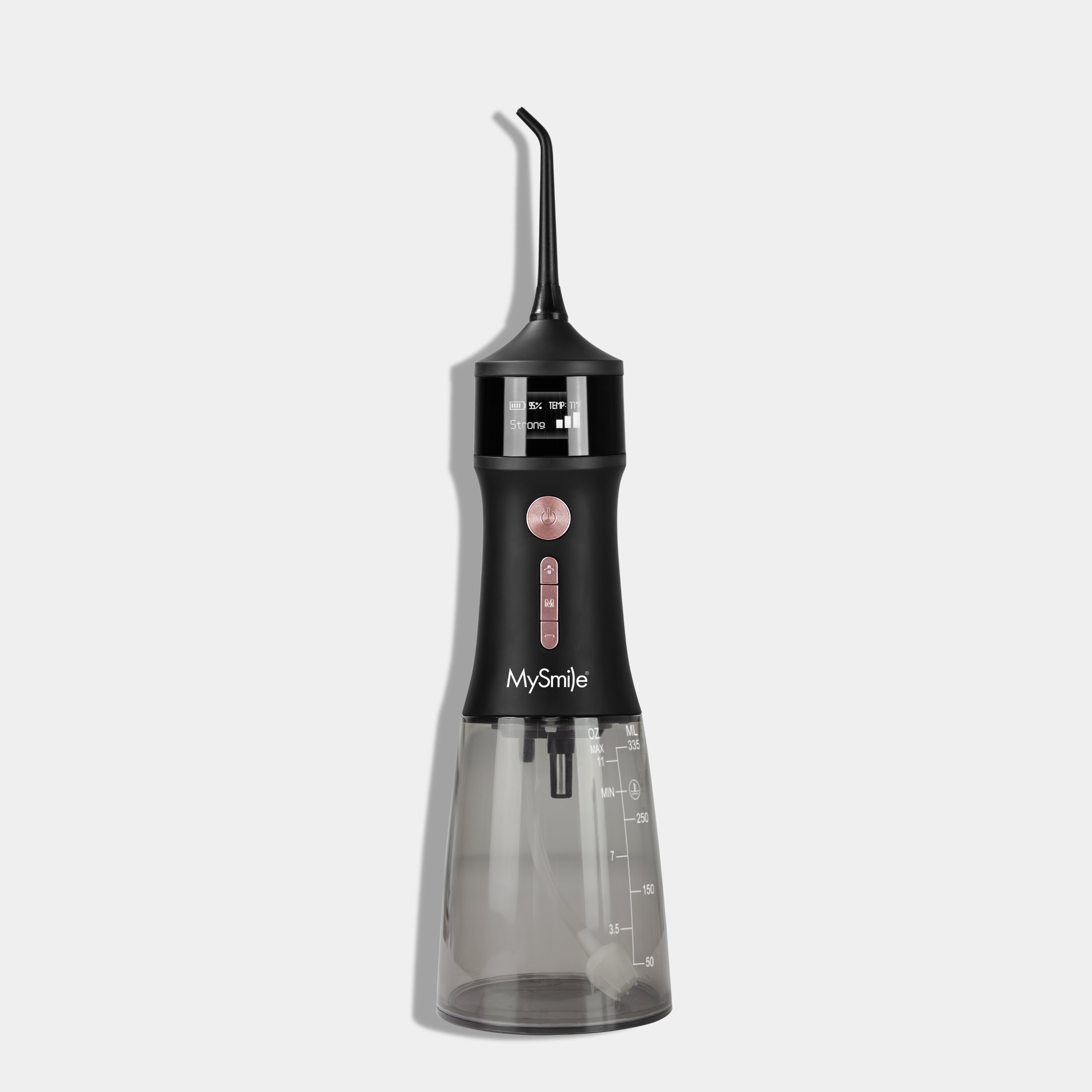
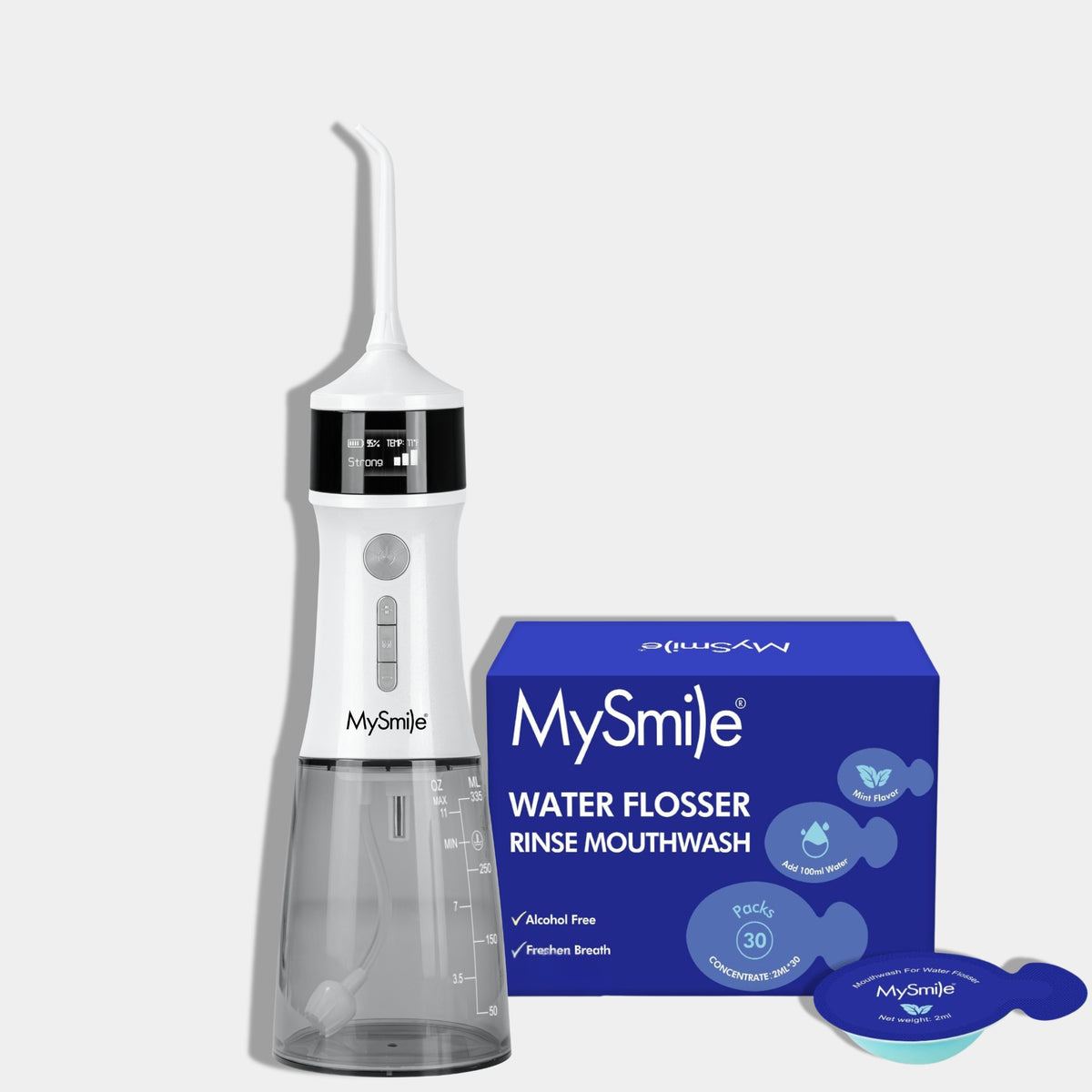
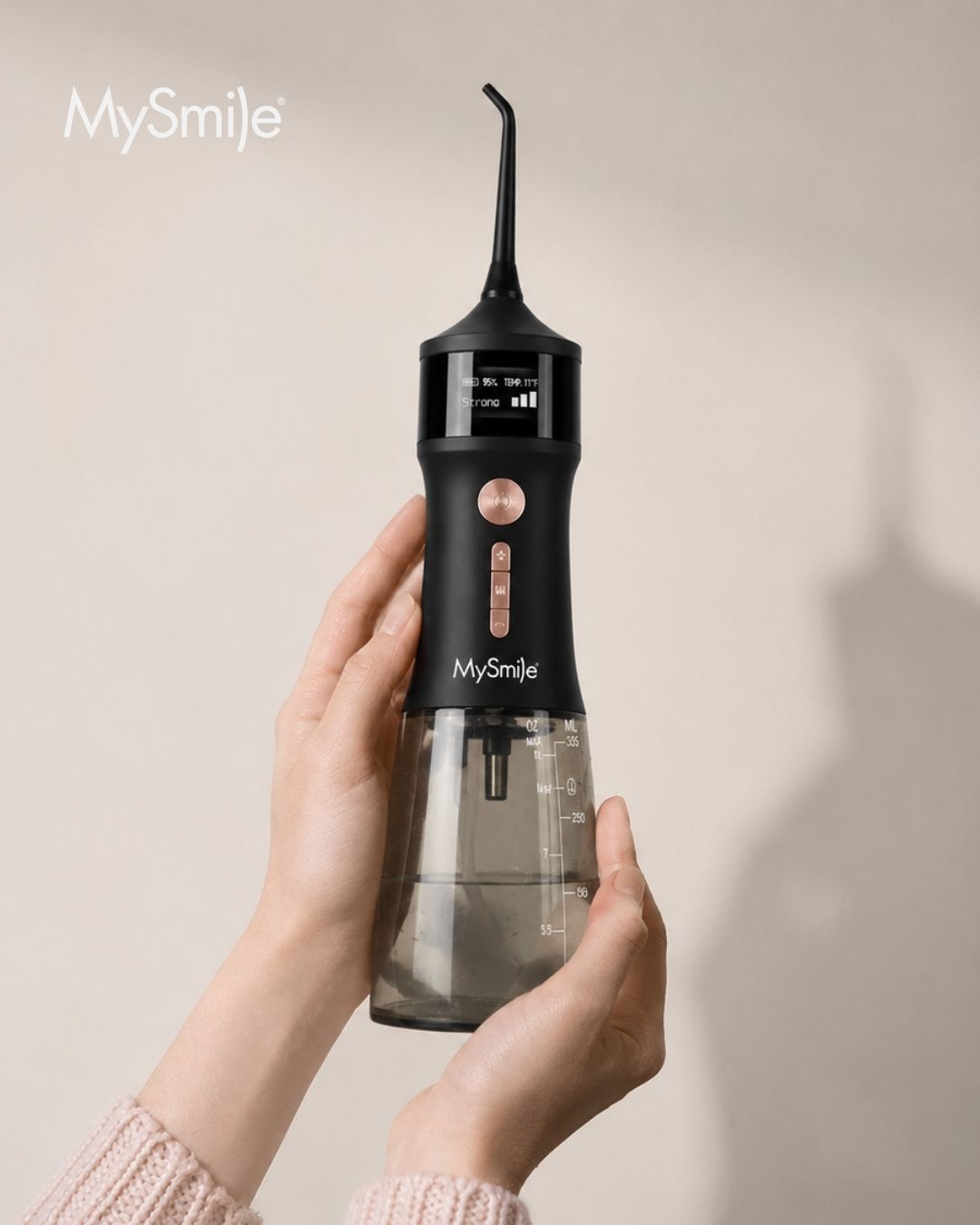
For Advanced Pressure Control: MySmile LP221
The MySmile LP221 Cordless Professional Water Flosser is designed for people who want more control over their daily routine.
Its features include:
-
2,000–2,800 water pulses per minute
-
Adjustable pressure from 40–150 PSI
-
Soft, Normal, Strong, and Pulse modes
-
Three selectable pressure levels on applicable modes
-
Ten possible mode-and-pressure combinations
-
OLED display showing mode, pressure, battery, and water temperature
-
335 mL reservoir
-
Multiple rotating jet tips
-
Built-in UVC care cycle for the reservoir and tips
-
Cordless, rechargeable design
-
Travel pouch
-
One-year warranty
The broad pressure range allows beginners to start gently while giving experienced users more customization.
For Portability and Everyday Value: MySmile LP211
The MySmile LP211 Cordless Select Water Flosser is a compact option for home, dorm, or travel use.
Its features include:
-
2,200–3,000 water pulses per minute
-
Adjustable pressure from 50–150 PSI
-
Strong, Normal, Soft, Pulse, and Child modes
-
Rechargeable cordless design
-
Four replacement tips
-
Water-resistant travel pouch
-
Extended battery life
-
One-year warranty
You can explore both models and other accessories in the MySmile Water Flosser Collection.
Frequently Asked Questions
Are water flossers actually worth buying?
A water flosser may be worth buying if it makes cleaning between your teeth easier and more consistent. It can offer particular value for braces, bridges, implants, limited dexterity, or sensitive gums. If you already use string floss correctly every day and have no difficult-to-clean dental work, it may be optional rather than essential.
Can a water flosser completely replace string floss?
Sometimes, but not for everyone. Water flossers and string floss clean differently. String floss makes direct contact with tooth surfaces, while a water flosser uses water pressure and pulsation. Ask your dentist whether one method or a combination is best for you.
Do water flossers remove plaque?
Water flossers can help disrupt and remove soft plaque, particularly along the gumline and in difficult-to-reach areas. They cannot remove hardened tartar.
Are water flossers good for braces?
Yes. Water flossers can make it easier to clean around brackets, wires, and bands. Your orthodontist may also recommend an interdental brush or specialized floss.
Are water flossers good for sensitive gums?
Adjustable water flossers can be more comfortable for some people with sensitive gums. Start with lukewarm water and the lowest pressure. Persistent bleeding or pain should be assessed by a dentist.
Do water flossers whiten teeth?
No. They may remove visible food debris and leave the mouth looking cleaner, but they do not bleach teeth or permanently change tooth color.
How long should water flossing take?
A thorough routine usually takes about one to two minutes, depending on the device, your dental work, and the size of the reservoir. Focus on reaching every tooth rather than rushing to meet an exact time.
Should children use water flossers?
Some devices include a child-friendly or beginner mode, but children should use a water flosser with adult supervision. Ask a dentist or orthodontist whether the device is appropriate for the child’s age and dental needs.
The Bottom Line: Are Water Flossers Useful?
Yes. Water flossers are useful interdental-cleaning tools, especially for people with braces, bridges, implants, sensitive gums, or difficulty handling string floss. Research suggests they can effectively reduce plaque, and in several comparative studies, they performed as well as or better than string floss.
Their biggest advantage may be practicality: if water flossing makes you more likely to clean between your teeth every day, it can be a meaningful upgrade to your routine.
Still, a water flosser does not replace brushing, professional cleanings, or necessary dental treatment. Use it gently, follow the manufacturer’s instructions, and ask your dentist which cleaning method best suits your teeth and gums.
This article is for general educational purposes and is not a substitute for professional dental diagnosis or treatment.