
Your phone can summarize your inbox. Your watch can remind you to move. Now toothbrushes come with their own list of smart features, from pressure sensors to AI brushing recognition.
But at 7 a.m., with toothpaste on your chin and five minutes to get out the door, what would actually make brushing easier?
A useful smart toothbrush should give you feedback you understand and can act on. That might mean noticing excessive pressure, helping you pace your routine, or making everyday controls simpler. The question to ask is what the technology helps you do at the sink.
What AI means in a toothbrush
AI and smart are often used together, but they describe different things. Some AI toothbrush systems use trained models to recognize brushing behavior and support guidance about coverage. For example, Oral-B describes AI brushing recognition on compatible models alongside app-based tracking and coaching.
A pressure sensor can work differently: it measures force and triggers a programmed response. A timer can signal when time is up. Those automatic features can be useful without involving machine learning.
That distinction makes shopping easier. If you want help tracking where you brush, look for documented coverage tracking. If your priority is pressure feedback, look at how the brush detects and responds to pressure. Each feature should have a clear job.
Help you notice your brushing pressure
Pressure is easy to overlook when brushing has become something you do on autopilot. A useful feedback system should make it clear when you need to ease up, without requiring you to guess what the signal means.
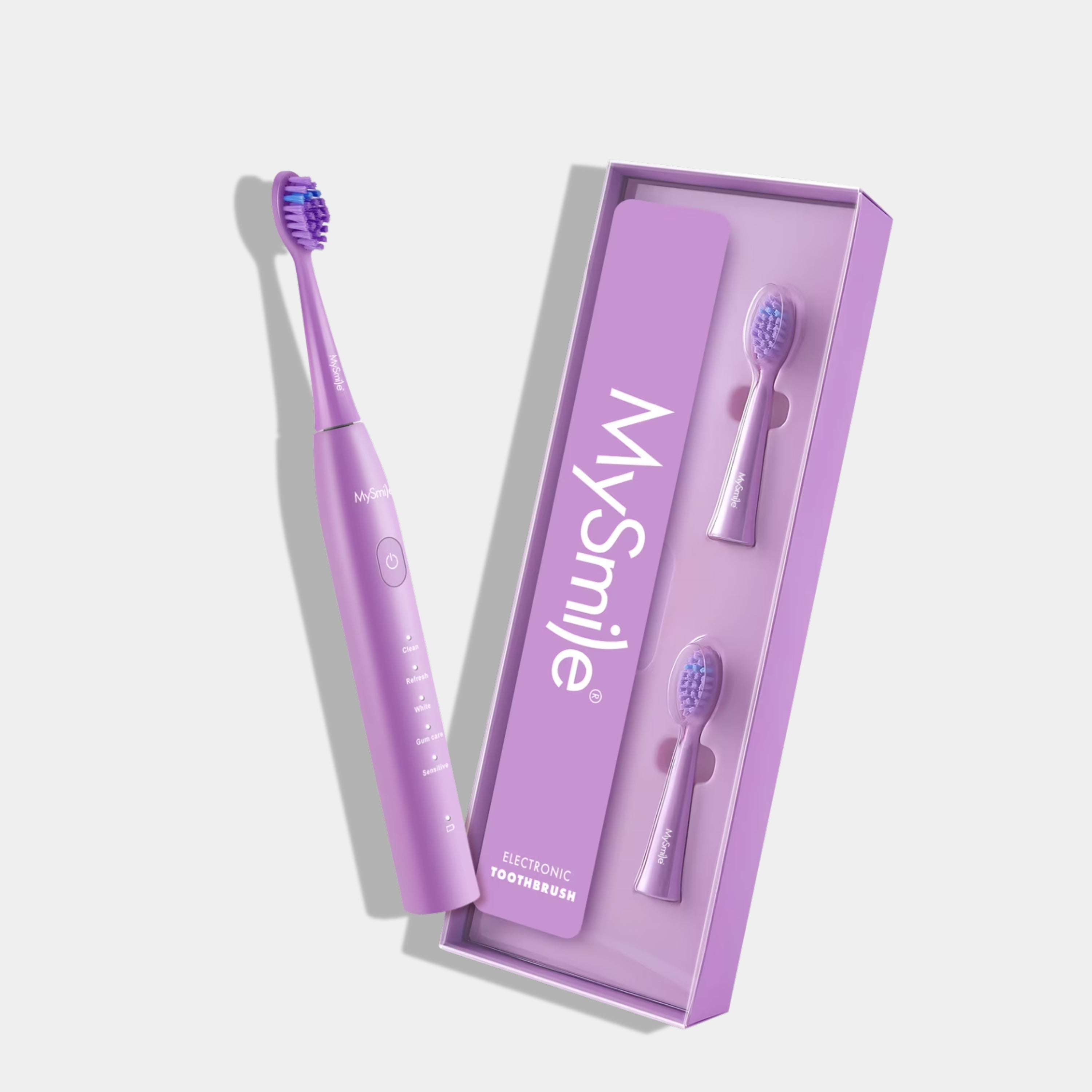
The MySmile D59 Smart Sonic Toothbrush automatically changes cleaning intensity in response to brushing pressure. Its listed protection feature reduces power when excessive pressure is detected, and its halo light provides visual feedback about brushing and cleaning modes.
Think of feedback as a cue to adjust your technique. Automatic power reduction does not physically loosen your grip, so you still need to respond when a brush signals excessive pressure. Follow the instructions for your model and use a gentle touch.
Make your brushing time more intentional
Two minutes can feel surprisingly long when you are standing still. A built-in timer gives your routine a clear duration, while interval reminders can prompt you to move around your mouth.
The American Dental Association recommends brushing twice daily for two minutes. A timer can support that habit, but elapsed time alone does not tell you whether you reached every tooth surface.
The D59 includes a two-minute timer, 30-second zone reminders, and automatic shutoff. Use the reminders to pace your brushing while paying attention to where the head is positioned. A timed cue is not the same as a sensor confirming an area is clean.
Keep everyday controls simple
Before choosing a brush, picture using it on a rushed morning or when you are tired at night. Can you understand its controls? Can you tell what its feedback means? Will you use the features you are paying for?
The D59 uses a buttonless, pick-up-to-start design and offers wireless charging. Its pressure-responsive controls put the emphasis on what happens during brushing. Explore the D59 and its operating instructions.
Convenience is personal. Some people enjoy reviewing an app after brushing; others prefer a straightforward routine at the sink. Choose the setup you can comfortably use every day.
Be clear about its capabilities
A helpful product description should explain what the brush senses, what it changes, and what the user still needs to do. Terms such as intelligent or adaptive are a starting point for questions, rather than proof of a particular technology.
With the D59, the focus is pressure-responsive brushing: automatic intensity changes and visual feedback you can respond to during your routine. These are concrete functions to consider when deciding whether a smart toothbrush fits your needs.
When comparing products, ask whether a feature detects pressure, tracks position, measures time, or simply displays a mode. These functions answer different needs. Also consider brush-head fit, replacement-head availability, charging requirements, and how easily you can interpret the feedback.
Support the rest of your oral care routine
Even a feature-packed toothbrush is one part of daily care. The ADA recommends a soft-bristled toothbrush and fluoride toothpaste, cleaning between teeth daily, and regular dental visits. Replace your brush or brush head every three to four months, or sooner if the bristles are frayed.
If you are unsure which brush or technique suits your mouth, ask your dental professional. The goal is a routine you can perform comfortably and consistently, with technology helping you pay attention along the way.
Meet the MySmile D59
If pressure feedback and simple automatic controls are high on your wish list, take a closer look at the D59. Read through how its modes work and consider how they would fit your morning and evening routine.