

For decades, fluoride has been the global standard for enamel health. But in recent years, nano-hydroxyapatite (nHAp) has emerged as one of the most promising alternatives — especially for patients with sensitivity or ingredient sensitivities.
To understand why, we invited Lisa Curbow, RDH — a clinician with nearly 30 years of experience and a certified dementia practitioner — to break down the science in a way patients and providers can both appreciate.
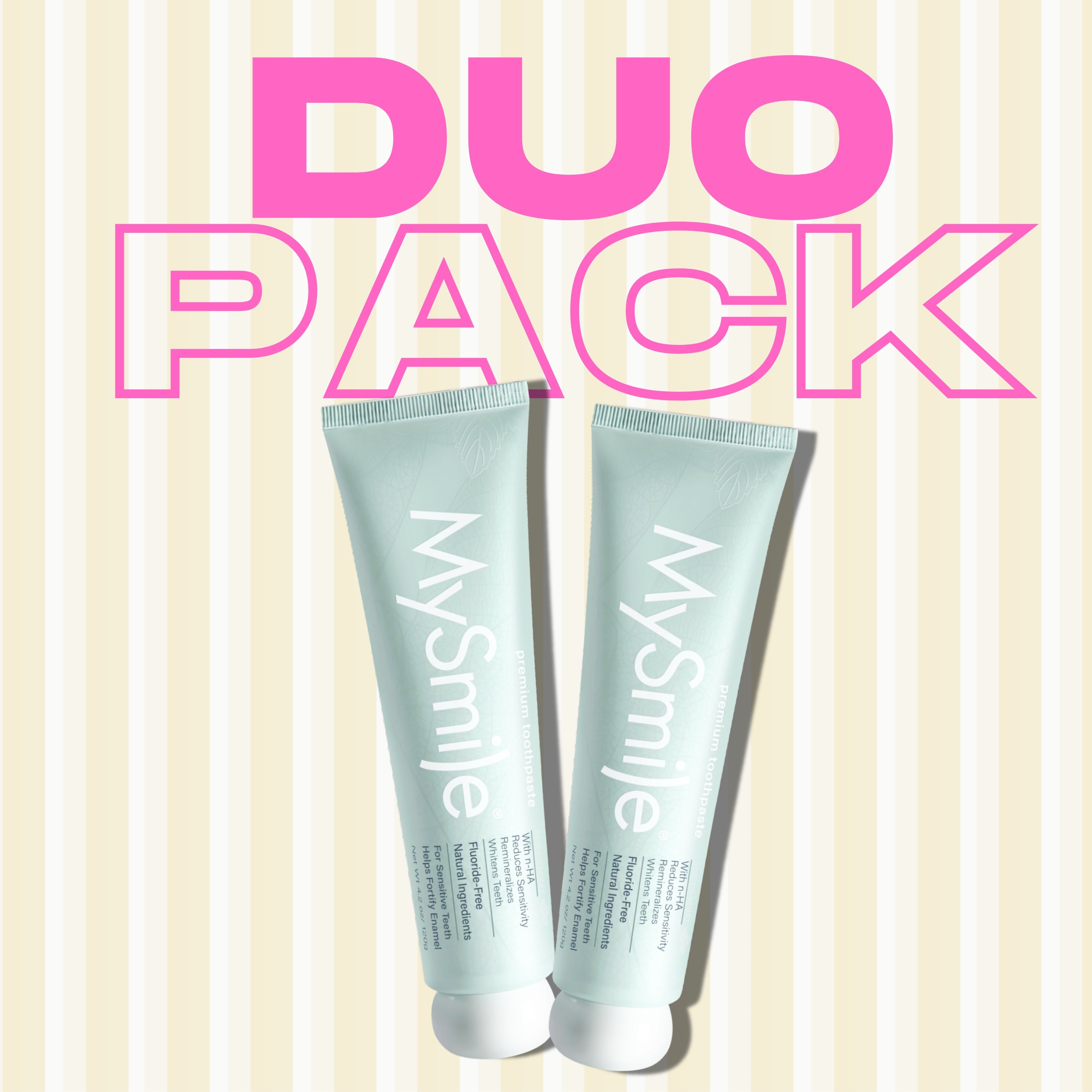
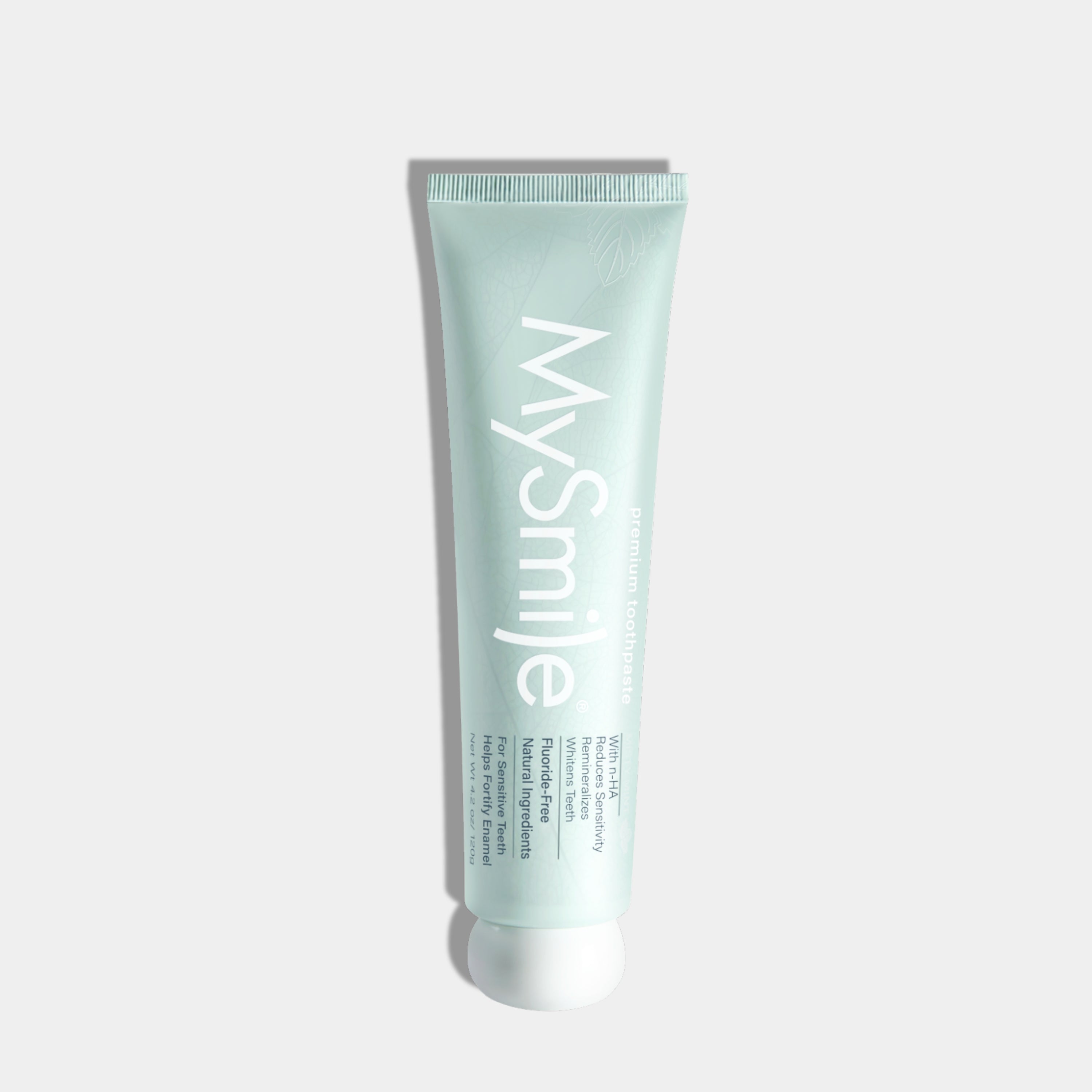
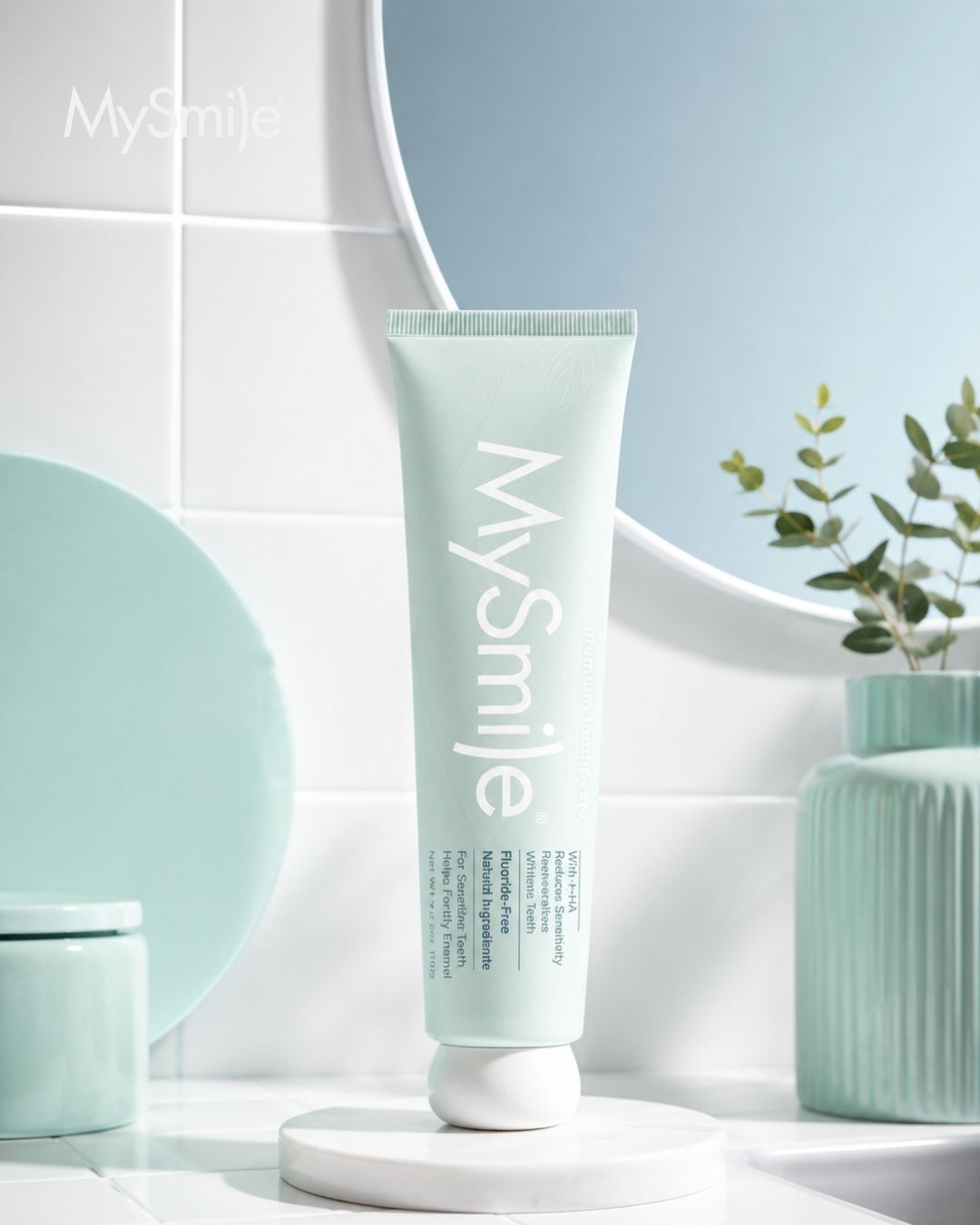
After evaluating the MySmile Fluoride-Free Nano Hydroxyapatite Toothpaste, Lisa shared her insights on the ingredient that’s transforming modern oral care.
“Nano-hydroxyapatite is basically what your enamel is made of — but in a form small enough to repair it.”
— Lisa Curbow, RDH

What Exactly Is Nano-Hydroxyapatite?
Hydroxyapatite is a calcium-phosphate mineral that makes up:
-
97% of enamel
-
70% of dentin
When produced in nano-sized particles (in the range of 20–80 nm), it can enter microscopic defects in enamel that ordinary toothpaste ingredients cannot.
“Think of enamel like a wall of tiny crystals. When the wall gets microscopic cracks, nano-hydroxyapatite can fit into those spaces and reinforce it.”
Unlike fluoride — which strengthens enamel indirectly by creating fluorapatite — nHAp works by rebuilding the enamel structure itself.
Why Hygienists Are Recommending Hydroxyapatite Toothpaste
Lisa explained that nHAp aligns with what many modern patients are asking for:
✔ Sensitive teeth
✔ Ingredient-conscious routines
✔ Fluoride-free daily care
✔ Post-whitening support
✔ Dry mouth or medication-induced sensitivity
✔ Special needs populations
✔ Older adults with thinning enamel
“A lot of my patients want cleaner ingredients, but they still need real enamel support. Hydroxyapatite gives them both.”
How Nano-Hydroxyapatite Supports Sensitive Teeth
Sensitivity often occurs when enamel thins and exposes microscopic tubules.
nHAp addresses this in three ways:
1. It fills and seals enamel micropores
The nano particles integrate with the tooth surface, physically reducing sensitivity triggers.
2. It smooths enamel for a naturally brighter appearance
Not through abrasion — but through surface refinement.
3. It supports remineralization even in a dry mouth environment
Unlike fluoride, which requires saliva to be effective.
Lisa emphasized:
“For my dry-mouth patients, hydroxyapatite can be a more consistent form of support.”
How Does Nano-Hydroxyapatite Compare to Fluoride?
Rather than replacing fluoride universally, nHAp offers a parallel pathway to enamel health, particularly for people who choose fluoride-free products.
| Feature | Fluoride | Nano-Hydroxyapatite |
|---|---|---|
| Strengthens enamel | Yes (indirectly) | Yes (directly) |
| Repairs surface defects | Limited | Strong |
| Reduces sensitivity | Yes (numbing effect) | Yes (structural repair) |
| Requires saliva | Yes | No |
| Safe if swallowed | Intake limits exist | Naturally occurring in the body |
| Preferred by sensitive patients | Sometimes | Frequently |
Lisa summarized it well:
“It’s not about one ingredient being better than the other — it’s about matching the right ingredient to the right patient.”
Why nHAp Works Well in MySmile Toothpaste
After reviewing MySmile’s formulation, Lisa noted that the toothpaste does more than simply include hydroxyapatite — it supports it with a thoughtful formula:
-
Fluoride-free for users who prefer avoidance
-
SLS-free to reduce irritation
-
Mild mint flavor easy for sensory-sensitive patients
-
Coconut-derived cleansers for gentle foam
-
Tea tree + xylitol + lysozyme as supportive oral health agents
“If someone wants a fluoride-free option that still rebuilds enamel, this is the type of formula I’d point them toward.”
Hydroxyapatite Beyond Whitening: Why Patients Stick With It
Lisa observed that patients often continue with hydroxyapatite toothpaste long-term because:
-
They notice less sensitivity
-
They tolerate the texture and flavor better
-
It feels less harsh, especially on irritated gums
-
The clean ingredient list aligns with their values
-
It works for the whole family, including sensitive-users
“Patients stay consistent when brushing is comfortable — and hydroxyapatite formulas make brushing comfortable.”
Conclusion: A New Tool in Modern Preventive Dentistry
Nano-hydroxyapatite is not a trend — it’s a return to using the building blocks of natural enamel.
For patients who experience sensitivity, prefer fluoride-free options, or require gentle care due to medical or sensory needs, nHAp offers a science-backed pathway to stronger enamel and a more comfortable brushing experience.
As Lisa puts it:
“Hydroxyapatite gives us another effective tool for people who haven’t found the right toothpaste yet.”
1 comment
Janette Miret
I thoroughly enjoyed this article, any particular products you recommend with this ingredient?
I thoroughly enjoyed this article, any particular products you recommend with this ingredient?